









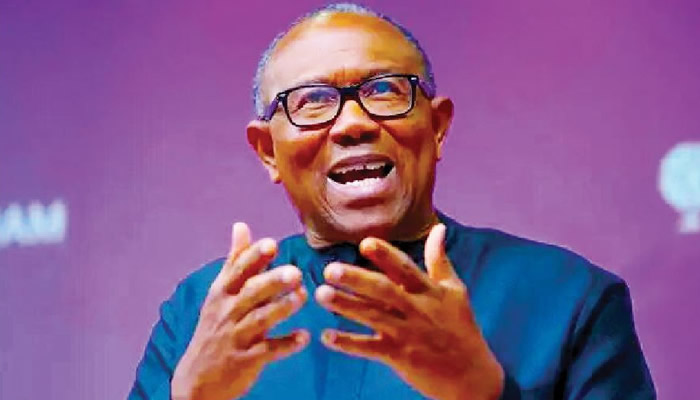
In the ongoing discourse surrounding Nigeria’s governance issues, Peter Obi, the Labour Party’s presidential candidate from the 2023 elections, has publicly criticized the recent appeal made by the Speaker of the Borno State House of Assembly, Abdulkareem Lawan. Lawan’s call for a new aircraft for Vice President Kashim Shettima was deemed inappropriate and disruptive by Obi, especially in light of the dire state of the nation’s affairs. In a detailed Facebook post, Obi expressed his dismay at Lawan’s insensitivity to the pressing economic and social issues facing Nigerians, emphasizing that the appeal for luxury travel arrangements should be dismissed amidst a backdrop of hunger, insecurity, and infrastructural failures.
Obi’s remarks reflect a broader concern that Nigeria is exhibiting characteristics of a failing state, reinforcing that current leaders seem detached from the realities experienced by ordinary citizens. The growing sense of poverty and degradation of living standards in Nigeria, with the nation ranking among the world’s most poorly governed and impoverished countries, underlines the incongruence of Lawan’s suggested priorities. Obi highlighted that the situation is dire, citing statistics indicating Nigeria’s status as the poverty capital of the world, which has escalated dramatically over the past decade, affecting millions who struggle with daily hunger and insecurity.
The severity of Nigeria’s infrastructural woes was also a point of emphasis for Obi, who referenced the repeated failures of the national electricity grid over the years that have led to significant economic losses for both businesses and households. He critiqued the governance failures that have caused many small businesses to either shut down or operate under distress, drawing attention to the urgent need for the government’s focus to shift from indulgent pursuits to solving these critical challenges that affect the livelihood of the citizens. The economic landscape, marred by harsh conditions, has warranted immediate action that prioritizes people’s needs over perceived luxuries of leadership.
Moreover, Obi contrasted Nigeria’s situation with that of Indonesia, noting how sustainable economic development allowed for the purchase of a presidential jet only after a solid growth foundation was established. This comparison serves to illustrate a stark difference in priorities and fiscal management between nations, suggesting that Nigeria would benefit from a similar pragmatic approach focused on the wellbeing of its populace before indulging in luxury expenditures. The political discourse, in Obi’s perspective, must revolve around practical governance rather than unnecessary opulence.
The urgency within Obi’s message is not only a demand for accountability but also a call for collaboration among Nigeria’s leadership to address pressing national issues. He appealed directly to President Bola Tinubu and Vice President Kashim Shettima to prioritize their commitment to tackling the numerous challenges the nation faces instead of succumbing to the allure of political travel luxuries. Obi urged a more grounded approach that emphasizes resolving systemic problems over short-term comforts, underscoring the need for a leader’s responsibility to their constituents over their personal desires.
In conclusion, the discussion led by Obi reflects a larger discourse on the priorities of Nigerian leadership in times of crisis. With widespread hardship, crises of governance, and a call for accountability, the focus should shift to formulating actionable solutions to the needs of the citizens rather than engaging in discussions that touch on luxury requests for politicians. It is a clarion call for leaders to remember their primary role as servants to the public, and to act decisively in addressing the challenges that threaten the fabric of Nigerian society.









