





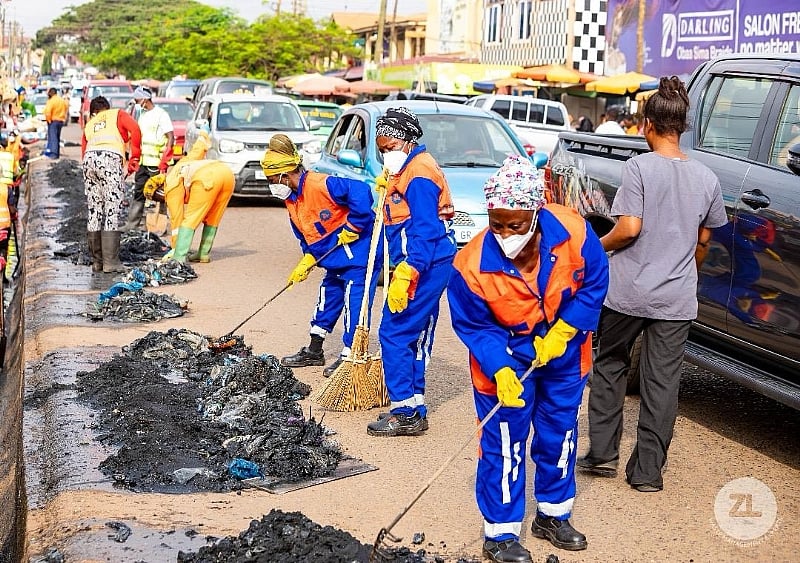
On Valentine’s Day, February 14th, a collaborative cleanup effort unfolded at the Madina Zongo Junction in Accra, Ghana, targeting the pervasive plastic waste clogging the area’s gutters and drains. The initiative, spearheaded by Onua FM in partnership with Zoomlion Ghana Limited, La Nkwantanang-Madina Municipal Assembly (LaNMMA), and community volunteers, aimed to address the mounting sanitation challenges posed by discarded takeaway containers, plastic water sachets, worn-out clothing, and shoes. The operation, commencing before dawn at 5:45 a.m., spanned from the Madina Zongo Junction traffic light, a key entry point to the bustling Madina Market, and extended along the thoroughfare to the Madina Post Office.
Zoomlion, a leading waste management company, played a crucial role by deploying substantial logistical support. This included a dedicated team of personnel equipped with essential tools like shovels, rakes, pickers, wheelbarrows, and protective gear such as nose masks, gloves, and Wellington boots. Compaction trucks were also on standby to efficiently collect the amassed plastic waste and other debris extracted from the choked drainage systems. The collective effort demonstrated a commitment to addressing the environmental and health concerns stemming from the accumulating refuse. Local shop owners, traders, and hawkers joined forces with Zoomlion and Onua FM, actively participating in the cleanup drive to restore cleanliness to the Madina market and its surrounding areas.
The cleanup crews diligently desilted the gutters, which were heavily impacted by plastic waste, and cleared the roadsides along the designated stretch. The pervasive stench emanating from the accumulated waste underscored the urgency of the situation, prompting many traders and shoppers to cover their noses with handkerchiefs. James Deku, a Communications Officer for Zoomlion Ghana Limited, highlighted the company’s focused attention on the Madina market area due to the high concentration of traders and the substantial volume of waste generated daily. He explained that Zoomlion has implemented a specialized waste rotational system to maintain cleanliness around the clock. This involves night cleaning operations starting at 10:00 p.m., after the market closes, and daytime cleaning commencing at 5:00 a.m.
Mr. Deku attributed the persistent blockage of the gutters to the irresponsible disposal practices of some traders. He urged them to procure waste bins from Zoomlion to facilitate proper waste collection. He also explained that the Valentine’s Day cleanup was initiated at the request of Onua FM, aligning with Zoomlion’s commitment to collaborating with stakeholders on environmental cleanliness initiatives. Emphasizing the shared responsibility for sanitation, Mr. Deku called for broader community involvement and urged district and municipal assemblies to enforce sanitation bye-laws, holding offenders accountable.
Nana Yaa Brefo Danso, the host of the Onua 95.1 FM show “Yɛn Nsɛmpa,” participated in the cleanup alongside her team. She explained that the event was part of the one-year anniversary celebrations of her show and underscored the importance of fostering a positive attitude towards environmental responsibility and public health. Ms. Danso proposed granting Zoomlion greater authority to prosecute sanitation offenders, suggesting that this could act as a deterrent and strengthen enforcement efforts. She believes that empowering Zoomlion with such authority would enhance accountability for sanitation violations and contribute to a healthier community.
The collaborative cleanup effort at Madina Zongo Junction served as a powerful example of community engagement in addressing pressing environmental challenges. The combined efforts of media organizations, waste management companies, local authorities, and volunteers demonstrated a shared commitment to improving sanitation and public health. The initiative also highlighted the need for ongoing education and enforcement to promote responsible waste disposal practices and prevent the recurrence of such issues. The organizers expressed their intention to replicate this successful cleanup model in other market centers and areas, further expanding the impact of their efforts.
The cleanup served as a tangible reminder of the interconnectedness between human activities and environmental health. The accumulation of plastic waste in gutters and drains not only creates unsightly conditions but also poses significant risks to public health and the environment. Clogged drainage systems can lead to flooding, which can spread disease and contaminate water sources. Moreover, plastic waste can break down into microplastics, which can enter the food chain and pose health risks to humans and animals. By actively participating in cleanup efforts, communities can directly address these challenges and create a healthier and more sustainable environment.
The collaboration between Onua FM, Zoomlion, and the local authorities exemplified the power of partnerships in tackling complex environmental issues. By pooling resources and expertise, these organizations were able to achieve a significant impact in a short period. The involvement of local traders and community members further amplified the effectiveness of the cleanup, demonstrating the importance of community ownership and participation in addressing local challenges. This collective action not only cleaned up the immediate area but also fostered a sense of shared responsibility for environmental stewardship.
The suggestion to empower Zoomlion with greater enforcement authority reflects a growing recognition of the need for stronger measures to combat illegal dumping and other forms of environmental pollution. While education and awareness campaigns play a crucial role in promoting responsible waste disposal practices, enforcement actions are often necessary to deter repeat offenders and ensure compliance with sanitation regulations. By granting Zoomlion the authority to prosecute offenders, the hope is to create a more effective deterrent and promote greater accountability for environmental violations.
The cleanup initiative at Madina Zongo Junction serves as a valuable case study for other communities facing similar challenges. By replicating this model of collaborative action, involving diverse stakeholders, and implementing effective enforcement mechanisms, other communities can take concrete steps towards creating cleaner, healthier, and more sustainable environments. This successful endeavor highlights the power of collective action and the importance of ongoing engagement in addressing the complex challenges of waste management and environmental protection.








