









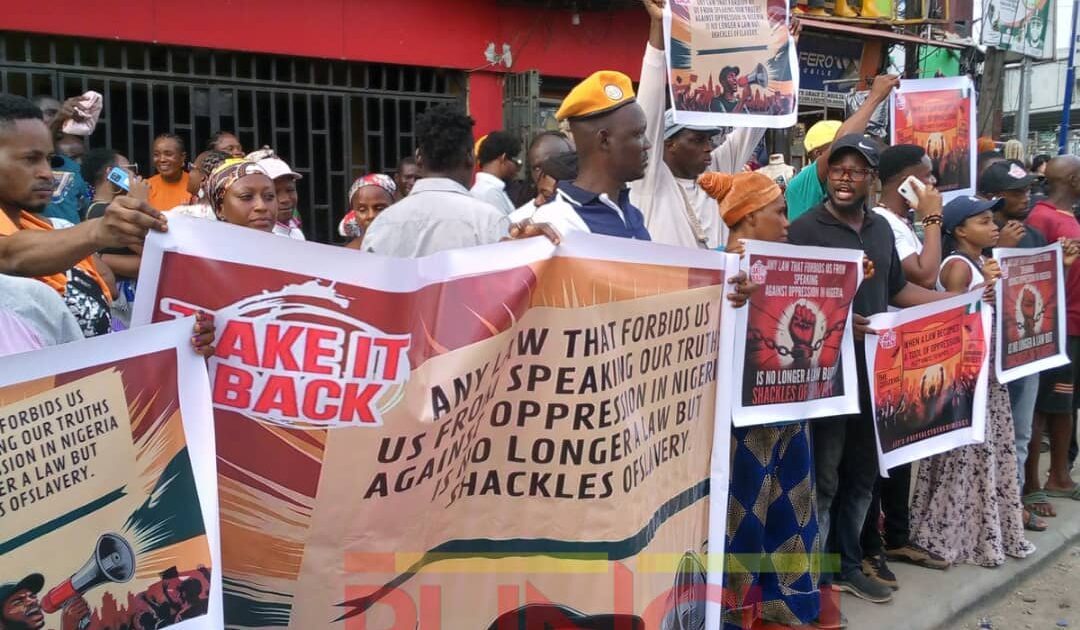
The Take It Back Movement (TIB), a prominent activist group, has formally announced its intention to hold a nationwide protest on June 12, 2025, coinciding with Democracy Day in Nigeria. This planned demonstration aims to address the escalating issues of insecurity and economic hardship plaguing the nation. The TIB, in an open letter addressed to the Lagos State Commissioner of Police, Moshood Jimoh, emphasized the constitutional right to protest, citing sections 39 and 40 of the 1999 Constitution, which guarantee freedom of expression and peaceful assembly. The organizers stressed the symbolic significance of June 12, a day historically associated with the struggle for democracy in Nigeria, and declared their unwavering commitment to exercising their civic rights. They demanded that the police, instead of suppressing dissent, provide protection for the protesters and ensure their safety throughout the demonstration. This announcement sets the stage for a potentially significant showdown between the government and citizens exercising their democratic rights.
The TIB’s letter serves as both a notification and a stern reminder to the authorities that the right to protest is not a privilege to be granted or revoked but a fundamental right enshrined in the constitution. The organizers underscored the fact that Nigerians have a rich history of fighting for their freedom and will continue to do so peacefully but resolutely. They explicitly called out the police for past incidents of brutality and suppression of peaceful protests, demanding a change in approach. Instead of viewing protesters as adversaries, the TIB urged the police to fulfill their duty to protect the citizens exercising their constitutional rights. This plea for protection highlights the potential risks faced by protesters in Nigeria and the vital role of law enforcement in safeguarding democratic processes.
The chosen date of June 12 carries immense historical weight in Nigeria. It commemorates the 1993 presidential election, widely considered to be the freest and fairest in the nation’s history. The election, won by Moshood Abiola, was annulled by the military regime of Ibrahim Babangida, plunging the nation into a period of political turmoil. This act of annulment remains a painful reminder of the fragility of democracy and the constant need to safeguard it against authoritarian tendencies. The TIB’s decision to hold the protest on this date deliberately invokes the spirit of that historic election and the ongoing struggle for true democracy in Nigeria.
The protest, according to the TIB, will be a collective expression of the people’s frustration with the pervasive insecurity and economic hardship that have become endemic in Nigeria. The insecurity, marked by kidnappings, banditry, and communal violence, has created a climate of fear and uncertainty across the country. The economic hardship, fueled by rising inflation and unemployment, has further exacerbated the suffering of ordinary Nigerians. These twin challenges have created a sense of urgency and desperation among the populace, fueling the desire for change.
The TIB’s demand for police protection underscores the precarious environment in which protests often take place in Nigeria. There have been numerous instances of peaceful protests being met with excessive force from security forces, resulting in injuries and even fatalities. This pattern of repression has created a chilling effect on freedom of expression and the exercise of civic rights. The TIB’s insistence on police protection is therefore not merely a request for security but a demand for the recognition and respect of the fundamental right to protest.
The planned protest, however, is not solely about security and economic hardship. It represents a broader call for accountability and good governance. The TIB’s message resonates with a growing segment of the Nigerian population disillusioned with the perceived failure of the government to address the myriad challenges facing the nation. The protest, therefore, becomes a platform not only to voice grievances but also to demand meaningful change and a more responsive government that prioritizes the welfare of its citizens. This demonstration promises to be a significant moment in Nigeria’s ongoing struggle for a more just and equitable society.









