





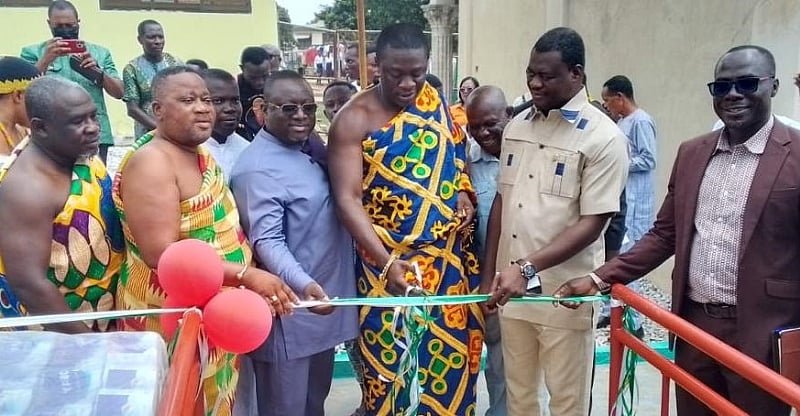
The Asantehene, Otumfuo Osei Tutu II, has praised the leaders behind the Greater Kumasi Metropolitan Area (GKMA) Sanitation and Water Project (SWP) for their timely delivery of sanitary and hygiene facilities aimed at enhancing both institutional and household sanitation. During the commissioning of two 12-seater toilet facilities at Osei Kyeretwie Senior High School (OKESS) in Kumasi, the Asantehene, represented by Nana Kusi Ababio, Oyokohene, highlighted the project’s significant impact in improving environmental sanitation. This advancement is particularly crucial for students, as it fosters a conducive learning environment and notably reduces absenteeism among adolescent girls. He emphasized the importance of access to functional toilet facilities, remarking, “To get access to a toilet like this, even though it is a right for every student, is also a privilege,” especially considering the struggles many students face in finding proper sanitation options.
In his address, Nana Ababio expressed concern over the state of sanitation faced by numerous students across various educational institutions. He recounted the daily challenges students endure in searching for safe places to relieve themselves, especially in the absence of adequate facilities. The new installations at OKESS, which caters to over 5,000 students, have the potential to significantly ease the burden on existing toilet facilities. The Asantehene emphasized how essential such resources are for improving the overall learning experience. After inspecting the newly constructed facilities, he commended the project’s aesthetic appeal and cleanliness, which he believes contribute positively to the educational environment.
Moreover, Nana Ababio praised the design of the facilities for being inclusive, particularly addressing the needs of persons with disabilities. The incorporation of accessibility features, along with amenities such as changing rooms for menstruating girls, comprehensive water supply systems, and handwashing stations, reflects a thorough understanding of diverse needs. The emphasis on making these facilities more universally accessible is an important step toward fostering an inclusive educational setting, which ultimately enhances the dignity and health of all students, thus promoting better learning conditions.
Mr. George Asiedu, the Coordinator for GAMA and GKMA SWP, elaborated on the project’s broader goals, stating that it prioritizes water, sanitation, and hygiene as part of the government’s commitment to achieving Sustainable Development Goal Six. He noted that good environmental hygiene is vital for sustaining human life, which has driven the initiative to construct over 30,000 household toilets and 140 institutional toilets across Greater Kumasi. This extensive effort not only enhances the physical infrastructure but also encourages sustainable hygiene practices among communities, directly addressing specific needs within educational institutions.
Additionally, Mr. Michael Mensah, the Headmaster of Osei Kyeretwie Senior High School, expressed gratitude towards the Ministry of Sanitation, Water, and Resources, along with the World Bank, for their roles in executing the project. His commitment to maintaining the facilities demonstrates a shared responsibility for ensuring that these investments serve their intended purpose effectively. By emphasizing sustainability and maintenance, Mr. Mensah underscores the importance of continuous improvement in sanitation standards within the educational sector.
In conclusion, the efforts of the GKMA Sanitation and Water Project reflect a proactive approach to tackling sanitation challenges within the Greater Kumasi region. The support from local leadership, educational institutions, and developmental partners signifies a collective commitment to improving environmental hygiene, especially for students. The new facilities at Osei Kyeretwie Senior High School serve not only as a model for future projects but also highlight the significant impact that well-planned sanitation resources can have on educational outcomes, health, and overall community well-being. As communities continue to prioritize sanitation and hygiene, these initiatives will contribute to a healthier and more equitable society.








