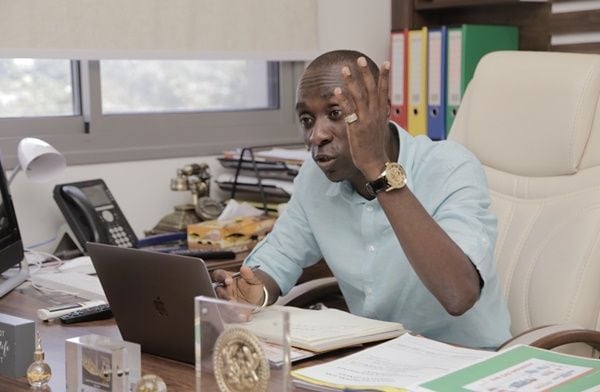
In recent developments concerning the Ghanaian Parliament, Mr. Ernest Owusu-Bempah, Deputy Communication Director of the New Patriotic Party (NPP), has publicly criticized Speaker Alban Bagbin’s decision to declare four parliamentary seats vacant. The seats in question—Agona West, Amenfi Central, Fomena, and Suhum—were deemed vacant because their holders opted to run as independent candidates or affiliate with other parties for the upcoming December 7 parliamentary elections. Bagbin’s announcement, made on October 17, 2024, invoked Article 97 of the Ghanaian Constitution, which mandates that members who alter their party affiliation during their term can prompt such vacancies. This move has sparked considerable controversy, leading the NPP parliamentary leadership to seek clarity from the Supreme Court regarding its legitimacy.
In a subsequent ruling, the Supreme Court issued a stay on the Speaker’s decision, underscoring the ongoing legal complexities surrounding parliamentary membership and party affiliation. Owusu-Bempah vehemently reacted to Speaker Bagbin’s actions, asserting that he overstepped his constitutional authority by making such a declaration. Owusu-Bempah emphasized that the interpretation of Ghana’s laws is strictly within the purview of the Supreme Court, stating that it was “absolutely ridiculous” for Bagbin to attempt to assume powers that do not belong to him. His comments reflect a broader concern within the NPP regarding the implications of Bagbin’s decision on political stability and the integrity of Ghanaian democracy.
During his critique, Owusu-Bempah did not hold back in his assessment of Speaker Bagbin’s tenure, suggesting that he will be remembered as potentially the worst Speaker in the history of Ghana’s Parliament. This remark underscores a significant level of animosity towards the current leadership in Parliament, especially given the ongoing political tensions tied to the upcoming elections. He characterized the actions of the National Democratic Congress (NDC), Bagbin’s party, as reflecting a broader trend of “constitutional lawlessness.” This criticism highlights what Owusu-Bempah perceives as deliberate attempts to undermine the judiciary’s authority and create a political environment laden with confusion ahead of the crucial elections.
Amid this political turmoil, the situation escalated further when Speaker Bagbin announced on October 22 that Parliament would be adjourned indefinitely, citing insufficient attendance and uncertainties regarding the current composition of the House. Bagbin’s announcement indicated that fewer than half of the members were present, which he considered a legitimate reason to adjourn. He referenced the Standing Orders of Parliament in making this decision, indicating that the circumstances at hand necessitated such an action for both public interest and the urgent needs of governance. The indefinite adjournment adds another layer of complexity to the already tense political landscape as it leaves unresolved the implications of the vacant seats and the broader implications for party dynamics leading up to the elections.
Owusu-Bempah’s statements reflect a deep-seated apprehension regarding the direction of governance as the NPP gears up for the elections. He believes that the NDC’s maneuvers are not just tactical but play into a broader strategy aimed at generating disruption and controversy well ahead of the crucial polling day. The suggestion that the NDC is attempting a “dress rehearsal” for chaos indicates a belief that the opposition party anticipates difficulties in the elections, which may be part of a larger narrative aimed at undermining public confidence in the electoral process.
In conclusion, the current parliamentary crisis in Ghana is emblematic of the intense political rivalries that characterize the run-up to elections. The disagreements over Bagbin’s declaration of seat vacancies and the subsequent legal and parliamentary responses illustrate the contentious nature of political interactions in Ghana. With the NPP seeking judicial recourse against the Speaker’s actions and the indefinite adjournment of Parliament raising further questions about governance during an election cycle, it remains to be seen how these developments will shape the electoral landscape and public perceptions of both the ruling party and the opposition. As the situation unfolds, the implications of these political maneuvers will likely have lasting effects on the nature of parliamentary democracy in Ghana and the credibility of its institutions.