The backlog of pension payments owed by the Federal and state governments in Nigeria has reached a staggering amount of over N193 billion, a situation that underscores the ongoing challenges faced by retirees in the country. Recent reports reveal that while some states, like Zamfara, Benue, and Kaduna, are making efforts to address these backlogs, the Federal Government is still lagging, particularly with an outstanding debt of over N88 billion tied to the Contributory Pension Scheme (CPS). The spokesperson for the National Union of Pensioners (NUP), Bunmi Ogunkolade, has confirmed that these accrued rights from March 2023 remain unpaid, emphasizing the pressing need for the government to fulfill its obligations. Under the Pension Reform Act of 2004 and its 2014 amendment, a framework was established for employees and employers to jointly contribute to pension funds, aiming to create a more sustainable pension system. However, the systemic failures in releasing the necessary funds continue to jeopardize the livelihoods of many retirees.
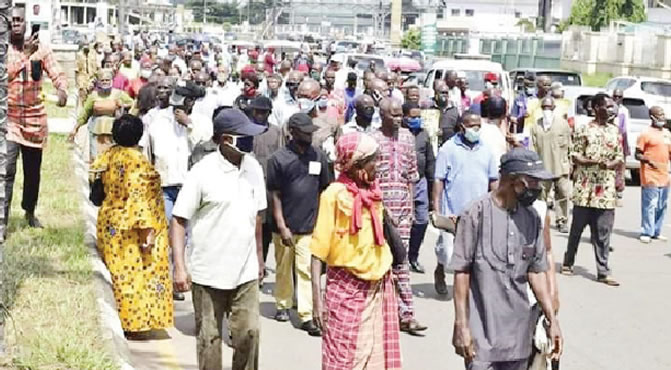
Pensioners are increasingly frustrated by the delays in receiving their entitled payments, prompting the NUP to organize a rally in Abuja on October 23 to demand the release of outstanding funds. A letter from the CPS retirees highlighted that the peaceful protest is aimed at pressuring the government to settle the accrued rights due to them. The rally is expected to take place at key government offices, including the Accountant-General of the Federation and the National Assembly. The antagonism from the retirees is compounded by delayed acknowledgment and release of funds by government officials, with sources indicating that attempts to resolve the issues of unpaid pensions have yet to reach fruition. This rally follows a series of online meetings among union members, further illustrating the collective discontent among pensioners regarding the state of their benefits.
In the midst of these national challenges, some state governments are taking significant steps to settle their pension arrears. For instance, Zamfara State Governor Dauda Lawal has successfully approved payments totaling N9.3 billion in pension arrears, beginning from February. His administration has verified and processed the payments for numerous pensioners who had not received their gratuities for years, reinforcing efforts to rectify the injustices of past administrations. This dedication to funding pension payments is commendable, yet it raises questions regarding the response of other states that continue to struggle with their pension obligations. In Plateau State, for instance, the chairman of the local NUP chapter, Yimusa Ishaku, has criticized the government’s perceived inaction in settling a backlog of N30 billion in pensions, highlighting ongoing suffering among retirees.
Addressing the issue of pension arrears is not uniform across states. In Benue, pensioners are owed approximately N70 billion, while in Kano, the governor has made progress by paying N11 billion in pension debts inherited from previous administrations. The contrasting approaches highlight how political will and fiscal management can significantly impact pensioners’ lives. Those in Kaduna face the uncertainty of pension payments under the contributory scheme, with ongoing discussions within the union to ascertain the total due amount. Meanwhile, some states like Nasarawa are beginning to alleviate their backlog by approving substantial payments to cover outstanding gratuities for retirees, showing a potential pathway for resolving these debts through improved revenue management.
Regrettably, not all states are making headway. The situation remains dire for many retirees in Enugu State, especially former primary school and local government employees, who have been without pension payments for over two years. The NUP has expressed deep concern over the death and suffering wrought by the government’s failure to address these debts. The Enugu State governor set up a committee to identify pensioners, but the lack of subsequent action has left many in limbo. Promises made to pay retirees seem increasingly hollow as payment delays persist, demonstrating a disconnection between government intentions and actions.
Kwara State presents another bleak scenario, where pension payments have ceased entirely. The NUP chairman described the reality for retirees as a bitter contrast to the comfort expected after years of labor, highlighting that gratuity payments are sporadic and unreliable. Communication with state officials regarding the pension situation has been met with delays, illustrating the lack of accountability and transparency in managing public funds meant for retirees. As many pensioners depend on these payments for survival, it becomes critical for the government to resolve these backlogs decisively and compassionately.
In conclusion, Nigeria’s pension crisis reflects a broader issue of governance and financial management, with over N193 billion in arrears highlighting the systemic failures affecting pensioners across the nation. While some states have made progress in addressing their obligations, others continue to neglect their duties, leading to immense suffering among retirees. The collective organizing of the National Union of Pensioners signals a growing resolve among retirees, demanding justice and the fulfillment of their rights. It is evident that without concerted government action and genuine financial reform, the plight of Nigerian pensioners will persist, demanding urgent attention from both local and federal authorities.