









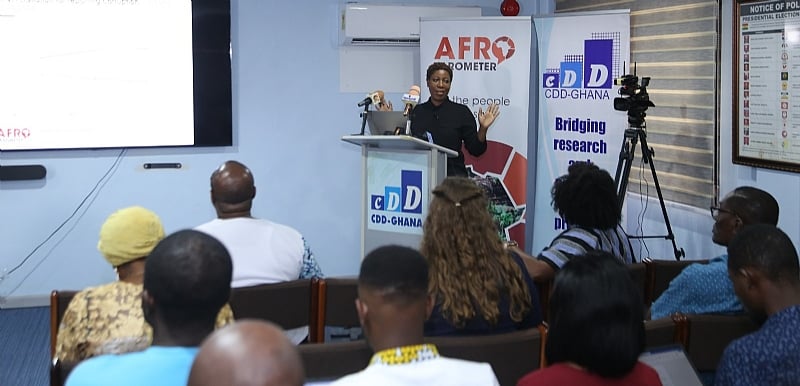
The Afrobarometer Round 10 survey has unveiled troubling rankings regarding corruption in Ghana, highlighting the Ghana Police Service and the Office of the Presidency as the most corrupt institutions in the nation. This survey reveals a notable decline in the overall confidence of Ghanaians in state institutions compared to previous years, including a slight dip since 2022 and a more profound decrease over the past decade. Furthermore, perceptions of corruption are anchored in sentiments that several key public officials, including police, presidential staff, tax officials, members of parliament, and judicial figures, are regarded as highly corrupt. A striking 74% of respondents believe that corruption has escalated considerably over the past year, illustrating a general trend of public dissatisfaction, even though this marks a marginal improvement from 2022.
The survey results also indicate a significant issue concerning the willingness of citizens to report corruption, with only 26% asserting that they feel safe doing so, reflecting a worrying four-point drop from the previous year. Dr. Edem Selormey, the Director of Research at CDD-Ghana, presented these findings, underscoring the dire consequences of pervasive corruption and the implications for institutional trust. Dr. John Osae-Kwapong, a Democracy and Development Fellow at CDD-Ghana, emphasized that the persistent issues with public trust have been reinforced by this latest round of survey data. The correlation is evident, as the erosion of trust in these institutions is seen as a critical barrier to effective governance and public service delivery.
Moreover, the survey highlights existing sentiments toward public officials in Ghana, with the police and presidency being at the forefront of the corruption conversation. Citizens increasingly feel disillusioned with public entities that are supposed to serve them, as trust levels have plummeted to alarming lows. Dr. Osae-Kwapong’s commentary underscores the cyclical nature of the trust deficit within public institutions, suggesting that previous revelations inform the current climate. This calls for a collective examination of the structures in place that perpetuate these negative perceptions rather than a singular focus on anecdotal instances of bribery or foul play.
The conversation surrounding corruption is further fueled by calls for reform and robust deterrent measures. Dr. Osae-Kwapong advocates for decisive repercussions when acts of corruption are identified, suggesting that accountability is essential to encourage a culture of integrity among public officials. Similarly, Madam Mary Addah, Executive Director of the Ghana Integrity Initiative, stresses the necessity of immediate action to combat corruption. She champions the idea that the younger generation is particularly susceptible to corrupt practices, making it imperative to shift societal narratives to foster a culture of integrity from the ground up.
In light of these survey results, the growing public demand for tangible anti-corruption strategies is urgent. Both Dr. Selormey and Madam Addah exhort leaders and stakeholders to work collaboratively to change the prevalent mindset surrounding corruption, emphasizing the role of public discourse in building a consensus against unethical behavior. By rejecting corruption vocally and actively seeking reforms, Ghana could steer a path toward improvement, ensuring that future generations are not entrenched in the issues of corruption plaguing public governance today.
The Afrobarometer Round 10 survey thus serves as a critical reminder of the entrenched culture of corruption within Ghana and the declining trust in key public institutions. With a significant majority of the populace perceiving an increase in corruption, the time is ripe for policymakers and civic leaders to take decisive action aimed at restoring public confidence. The call for instilling stringent anti-corruption mechanisms reflects a collective desire for a systemic change that prioritizes integrity, accountability, and transparency across all sectors of society. Only through proactive engagement and reform can Ghana aspire to overcome these challenges and foster a more trustworthy governance landscape for all.









