





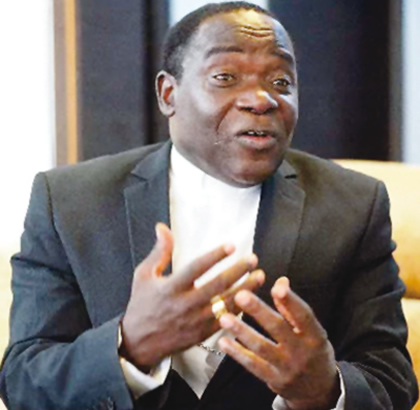
The recent statement from the Presidency underscores President Bola Tinubu’s readiness and capability to lead Nigeria, rejecting the notion posited by Bishop Matthew Kukah that Tinubu, like many Nigerian leaders, is an accidental leader. Mr. Bayo Onanuga, the Special Adviser to the President on Information and Strategy, emphasized that Tinubu’s ascent to leadership was a product of deliberate preparation rather than chance. In his comments to Vanguard, Onanuga asserted that Tinubu is actively striving for a transformative agenda aimed at elevating Nigeria to greater heights, suggesting that the President’s leadership ethos is grounded in significant foresight and planning rather than serendipity.
Onanuga refuted Kukah’s characterization by arguing that Tinubu is demonstrating a reformative spirit, undertaking extensive changes to improve various sectors, including taxation and the oil industry. According to Onanuga, these reforms are not instantaneous; they require time and significant effort to yield results. He acknowledged that these changes might adversely affect some citizens but asserted that Tinubu is committed to providing support for those impacted to prevent them from being left behind in these transitions. Such comments portray Tinubu as a leader conscious of his reforms’ societal ramifications and committed to navigating the complexities of governance for Nigeria.
In contrast, Kukah’s remarks during the inauguration of Start-Rite School’s new building reveal a broader critique of Nigeria’s leadership history. He identified a consistent pattern of unprepared leadership, suggesting that many leaders, including Tinubu, entered power without the requisite experience or vision. Kukah underscored that this historical pattern weakens the ability of the country to attain effective governance and adapt to a rapidly evolving global environment. Specifically, he pointed to the series of leaders, including former Presidents Jonathan, Buhari, and Obasanjo, who he argues stepped into their roles due to unexpected circumstances rather than systematic preparation or strategic planning.
Kukah stressed that the essence of effective governance lies in having a profound understanding of the socio-political landscape and maintaining adaptive expectations for leadership—especially as the global context continues to shift. The historical narrative he provided serves to critique not only the current state of leadership under Tinubu but also highlights a systemic issue within Nigeria’s political structure, where leaders emerge from a cycle of unforeseen circumstances rather than being properly groomed for the complexities of their roles.
In addition to the discourse on leadership, insights from Brig. Gen. Buba Marwa, Chairman of the National Drug Law Enforcement Agency, revealed a troubling layer of Nigeria’s societal struggles tied to leadership failures. Marwa pointed to the alarming issue of visually impaired individuals becoming entrapped in drug trafficking, signifying a multifaceted challenge that stems from inadequate governance and oversight. His recounting of recent operations adds a severe dimension to the discussion about leadership, underscoring how societal dysfunctions may reflect broader failures in governance and accountability.
The commemoration of Amaka Ndoma-Egba via the memorial lecture underscored the vital role of education and leadership in shaping societal values and capacities. Senator Victor Ndoma-Egba’s remarks about his late wife highlighted the importance of nurturing youth and empowering communities through education. As the school established by Amaka has grown remarkably since its inception, it serves as a beacon for how visionary leadership can create lasting societal impacts. The event brought attention to the intertwined nature of education, leadership, and governance, calling for a recommitment to knowledge-driven strategies to navigate Nigeria’s multifaceted challenges effectively.








