





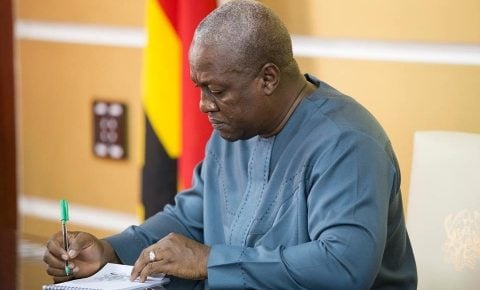
President John Dramani Mahama’s recent actions underscore his administration’s commitment to transparency and accountability in public office. The President, having personally fulfilled the constitutional mandate of asset declaration on February 18, 2025, has firmly set a deadline of March 31, 2025, for all his appointees to follow suit. This decisive move signals a strong message against corruption and reinforces the importance of probity within the government. The President’s emphasis on adherence to this legal requirement is backed by the threat of significant repercussions, including potential dismissal from office, for those who fail to comply. This clear directive establishes a precedent for future officeholders and emphasizes the gravity of this crucial aspect of public service.
The President’s proactive stance on asset declaration began earlier, on January 22, 2025, during the swearing-in ceremony of six new ministers. He used this platform to publicly urge all appointees to initiate the asset declaration process promptly. This preemptive call to action, preceding the official deadline, demonstrates the President’s commitment to ensuring that his administration operates within the confines of the law. By publicly addressing this requirement during the swearing-in, Mahama not only emphasized its importance but also publicly affirmed his own commitment to leading by example. The announcement of the deadline being delegated to the Chief of Staff highlights a streamlined process, fostering efficiency and ensuring clear communication within the administration.
President Mahama’s directives are firmly rooted in the legal framework established by the 1992 Constitution and the Public Office Holders (Declaration of Assets and Disqualification) Act, 1998 (Act 550). These two crucial pieces of legislation provide the legal basis for asset declaration in Ghana, outlining the procedures and obligations for public officials. Article 286(1) of the Constitution mandates asset declaration, effectively enshrining transparency and accountability as core principles of public service. Act 550 further elaborates on the process, providing detailed guidelines for implementation and stipulating the consequences of non-compliance.
The asset declaration process itself involves a comprehensive disclosure of a public official’s financial standing. This includes declaring all assets, both within and outside Ghana, along with details of income sources and any existing liabilities. This disclosure provides a snapshot of the official’s financial situation at the beginning, during, and end of their tenure, allowing for scrutiny and ensuring that any significant changes in wealth can be monitored and investigated if necessary. The regular four-year cycle of declarations further enhances transparency and promotes ongoing accountability.
The rationale behind asset declaration lies in its preventative and detective functions in combating corruption. By mandating transparency regarding the financial holdings of public officials, it becomes more difficult to amass illicit wealth undetected. The declaration process acts as a deterrent, discouraging corrupt practices and promoting ethical conduct. Furthermore, it serves as a tool for detection, providing a baseline against which future financial activity can be measured. Discrepancies between declared assets and subsequent wealth accumulation can raise red flags, prompting investigations into potential corruption.
The President’s emphasis on empowering anti-corruption institutions is another vital aspect of his commitment to transparency. He has clearly stated that these institutions will be given the necessary authority and resources to investigate and prosecute any appointee found to be in violation of the law, regardless of their position. This firm stance reinforces the message that no one is above the law and demonstrates a commitment to holding all public officials accountable for their actions. By actively supporting and strengthening these institutions, the Mahama administration aims to create a climate where corruption is not tolerated and where the rule of law prevails. This commitment to an independent and robust anti-corruption framework is crucial for building public trust and ensuring the integrity of the government.








