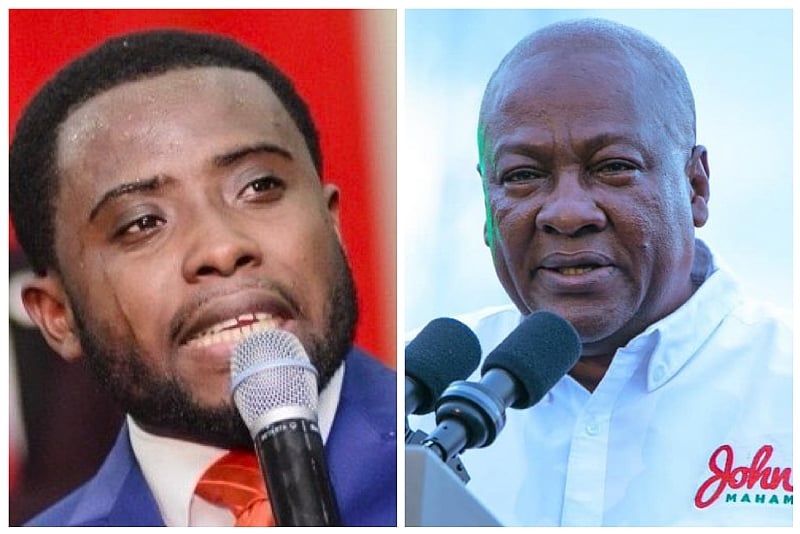
Prophet Bernard Elbernard Nelson-Eshun, the lead pastor of Spiritual Revival Ministries, has made headlines once again with his prediction regarding the 2024 presidential election in Ghana. Following a series of national elections marked by political tension and high stakes, the cleric took to social media on October 22 to share a detailed vision concerning the upcoming election. Entitled “My Third Vision Concerning Ghana’s 2024 Presidential Elections,” the post articulates what he claims to have witnessed in a prophetic dream: a vivid and unprecedented scene unfolding on December 7, the official election day. Known for making controversial prophecies, Prophet Elbernard’s statements have attracted both supporters and skeptics alike.
According to his account, the vision commenced with the actual voting process, where ballot papers were distributed to the electorate. As he described it, the atmosphere of the voting event was palpable, filled with the tension and anticipation that usually accompanies such a significant day in a country’s democratic process. However, amid the logistical elements, it was the appearance of the ballot papers that particularly caught his attention: he noted that the count reached eight, which prominently featured John Dramani Mahama’s image alongside the logo of the National Democratic Congress (NDC). This specific detail not only signifies the candidate’s alignment with his party but also suggests a pivotal moment for voters as they prepared to make their choices.
Delving deeper into his vision, Prophet Elbernard declares that the result of the election is clear; he asserts that, in his dream, Mahama was declared the President of Ghana. This proclamation has incited various reactions from the public and lends itself to further discussions about the implications of prophetic pronouncements in political contexts. As Ghana approaches the election date, these kinds of statements may play a significant role in shaping public opinion and voter sentiment. The pastor’s confidence in Mahama’s victory stands in contrast to other prophetic voices in the country, adding to the charged atmosphere leading up to the elections.
The backdrop to these prophetic declarations cannot be ignored. Ghana’s political landscape is characterized by fierce rivalry, particularly between the NDC and the ruling party, the New Patriotic Party (NPP). In recent months, there has been a flurry of prophecies from various religious figures, some of whom have forecasted success for Dr. Mahamudu Bawumia, the NPP’s flagbearer for the upcoming elections. This divergence in prophetic predictions illustrates the complexities of Ghanaian politics, where religious authority and political aspirations often intersect. The conflicting visions may influence how voters react as they consider the competing narratives around their choices in December.
Moreover, the role of prophecy in the political discourse raises important questions about the intersection of religion and governance. Many in Ghana take the pronouncements of religious leaders seriously, viewing them as divine guidance that affects their electoral decisions. The proliferation of prophecies in this electoral cycle underlines the strong cultural belief in spiritual consultation among voters. For some, the prophet’s words can bolster confidence or incite fears that could determine how the electorate mobilizes in the run-up to the polls.
As the country gears up for a decisive vote, the predictions from Prophet Elbernard and other spiritual leaders will undoubtedly continue to create waves and debates among both supporters and critics. How these spiritual insights interface with political campaigns may well be a determining factor in the election outcomes. The coming weeks will reveal whether the prophecy of Mahama’s victory resonates with the electorate or if the NPP can leverage its campaign strategy to sway voters in its favor. Whichever way the pendulum swings, the blend of faith and politics will continue to be a significant component of Ghana’s democratic experience.