









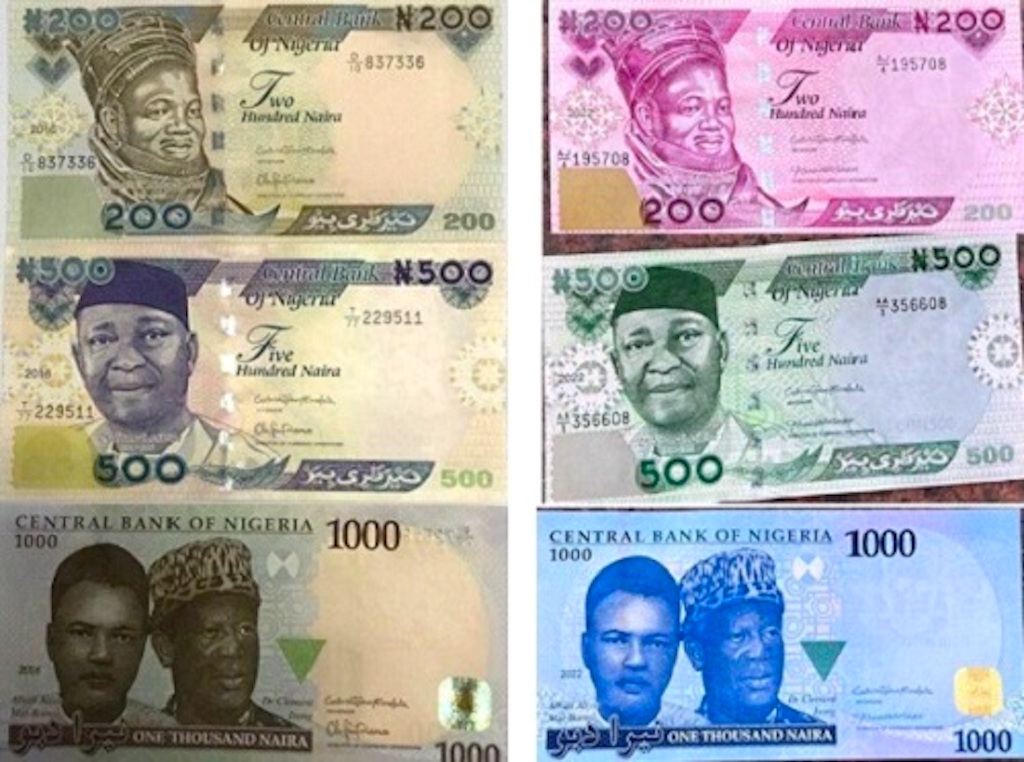
On Thursday, a significant uproar unfolded online after the House of Representatives inaccurately announced that the old naira notes would cease to be regarded as legal tender by December 31, 2024. This statement was at odds with a recent ruling by the Supreme Court and contradicted the official position of the Central Bank of Nigeria (CBN). The confusion derived from a motion introduced by Victor Afam Ogene, a member of the Labour Party representing Ogbaru Federal Constituency in Anambra State, who claimed that a Supreme Court judgment mandated the cessation of the old naira notes as a medium of exchange starting next January. However, the CBN promptly responded, asserting that the old N200, N500, and N1,000 banknotes would remain valid as legal tender for an indefinite period, rejecting the claims made by Ogene.
This situation traces back to the policies initiated under former CBN Governor Godwin Emefiele, who highlighted in an October 2022 Monetary Policy Committee meeting that the rising inflation was exacerbated by the circulation of larger denomination notes like the N1,000 and N500. In line with this, Emefiele announced a redesign of the banknotes and set forth a deadline for the old notes to be used as legal tender, which was initially established for January 31, 2023, but later extended to February 10 due to various challenges. Legal disputes ensued, led by states such as Kaduna, Kogi, and Zamfara, which questioned the proposed policy, leading the Supreme Court to issue an immediate restraining order that ultimately allowed for the continued use of both old and new naira notes until further notice.
The Supreme Court’s ruling on November 29, 2023, clarified that the old and new naira notes would coexist as legal tender. However, Ogene’s subsequent motion stirred further contention by suggesting that the deadline set for the cessation of the old notes had been misinterpreted. In a statement released by the CBN, Sidi Hakama, the acting Director of Corporate Communications, emphasized the importance of dispelling these inaccuracies, asserting that the bank would ensure all banknotes, both new and old, would remain in circulation indefinitely. This clarification revealed the continuing misunderstandings surrounding the legal status of the old naira notes, which the CBN worked to alleviate.
Following the CBN’s statements, Ogene maintained that the house’s intervention was significant, despite the errors in his initial motion. He pointed out the ongoing contradictions and lack of decisiveness from the CBN regarding the policy’s implementation and legal mechanics. Ogene expressed concerns about the practical implications of having two sets of currency notes in circulation, questioning the reasoning behind the introduction of new banknotes if the intention was not to replace the old ones eventually. He also highlighted the persistent issues within the banking system, where citizens faced financial losses due to the poor condition of notes available in banks, raising inquiries about the CBN’s oversight in remedying this predicament.
Addressing the heart of the issue, Ogene asked what global precedent exists for a country to manage its economy using two distinct sets of currency notes that are not easily distinguishable. His remarks implied that the current situation complicates transactions and adds unnecessary confusion for everyday citizens. Furthermore, he raised serious concerns about the practical experience of Nigerians, who continue to encounter difficulties with currency acceptance and degraded notes causing financial losses. Ogene called out the inefficiency of the CBN in not addressing these currency quality problems, suggesting that citizens are burdened with the consequences of these unresolved issues while the CBN seems to remain uninvolved.
In conclusion, the erroneous announcement from the House of Representatives about the old naira notes becoming invalid by the year’s end highlighted the broader issues surrounding currency management in Nigeria. The CBN’s efforts to clarify the situation exemplify the complexities faced when introducing new currency while attempting to phase out older denominations. This juxtaposition of old and new notes underscores a lack of clarity in policy implementation, leading to confusion among the public and ongoing operational challenges within the banking sector. With growing concerns about currency quality and the overall management of Nigerian banknotes, it remains crucial for the CBN to navigate these challenges effectively to restore public confidence and streamline the nation’s payment system.









