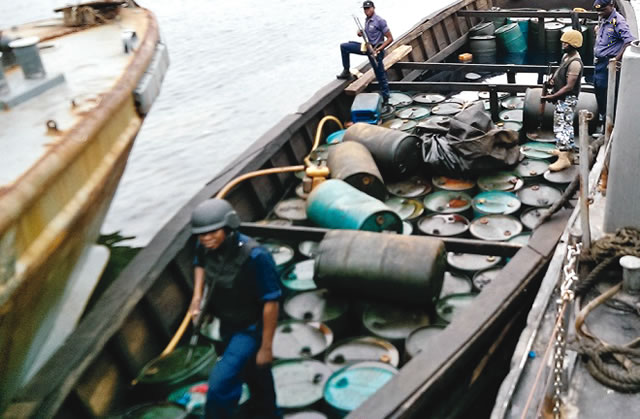
The National Inland Waterways Authority (NIWA) has announced its intention to phase out wooden boats from Nigeria’s inland waterways as part of its broader initiative to improve water safety and enhance travel. Bola Oyebamiji, the Managing Director of the NIWA, emphasized that wooden boats currently represent over 90% of the vessels operating on the waterways and are responsible for the majority of accidents across the nation. The agency considers these boats to be problematic due to non-compliance with operational standards, including unsafe practices such as traveling at night, overloading, and the absence of life jackets for both boat operators and passengers. Oyebamiji pointed out that night travel constitutes a criminal offense, primarily because many wooden boats lack lights, increasing the risk of incidents.
To address these safety concerns in the short term, NIWA has significantly increased the number of its marshals at jetties, rising from 80 to 350 throughout the country. These marshals work in shifts to ensure that safety regulations are being followed. Furthermore, NIWA is actively implementing a safety campaign aimed at educating boat operators and passengers about the dangers associated with their current practices, such as nighttime travel and overloading. This campaign is being conducted in various languages to ensure greater reach and understanding among local communities. By combining education and community engagement, NIWA aims to promote better adherence to safety protocols.
Looking towards the long term, NIWA’s strategy includes a complete transition away from the use of wooden boats. In collaboration with the Nigerian Presidency and the Ministry of Marine and Blue Economy, the agency is exploring alternatives to wooden vessels. The intention is to replace these boats with more modern and safer options that adhere to operational standards. In the interim, NIWA plans to deploy more patrol boats to oversee compliance among operators and to collaborate with the Nigerian Navy for enhanced oversight and safety enforcement on the waterways.
Oyebamiji acknowledged that much of the challenge surrounding water safety stems from human behavior and attitudes, asserting that individuals often attribute safety risks to external factors or divine intervention rather than recognizing their own roles in ensuring safety standards. He stressed the need for cultural change regarding waterway safety, underscoring that individual actions can significantly impact overall safety outcomes. This realization leads to a commitment from NIWA to continue its education and enlightenment efforts while also enforcing penalties for those who violate safety codes.
He articulated a vision for a safer future for Nigeria’s waterways, with an ultimate goal of achieving zero fatalities. He believes that by fostering a culture of compliance and prioritizing safety, all stakeholders can contribute to a more secure environment for water travel. Oyebamiji called on the entire community—boat operators, passengers, local governments, and the NIWA itself—to work collaboratively in adhering to the established rules and regulations for safe water travel.
In conclusion, NIWA is on a transformative path to enhance safety on Nigeria’s inland waterways by phasing out wooden boats and implementing strategic safety measures. With increased oversight through marshals, educational campaigns, and collaboration with key stakeholders, the authority aims to mitigate the risks associated with current boating practices. Oyebamiji’s commitment to safety, backed by a clear vision for the future of water travel in Nigeria, lays the groundwork for creating a safer and more reliable transportation option for the communities that depend on the nation’s waterways.