





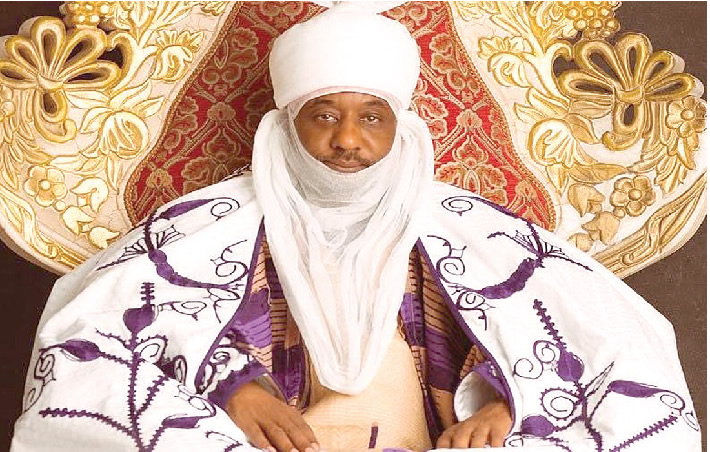
Muhammadu Sanusi II, the 16th Emir of Kano, delivered a forceful condemnation of domestic violence against women, emphasizing the urgent need for legal and societal changes to protect women’s rights within the context of Islamic teachings. Speaking at Bayero University Kano during the 2024 National Dialogue on the role of Islamic Opinion Leaders in the prevention of Gender-based violence in Northern Nigeria, Sanusi declared that any traditional title holder under his authority who resorted to physical violence against their wife would be stripped of their title. This decisive stance underscores the Emir’s commitment to challenging harmful cultural norms that perpetuate gender inequality and violence.
Sanusi’s call for action extended beyond his own domain, urging a critical review of Section 55 of the Nigerian Penal Code. This controversial provision grants husbands the legal right to “correct” their wives, provided it adheres to “lawful customs” and does not inflict “grievous hurt.” The ambiguity of this clause has led to widespread abuse, enabling husbands to justify physical violence against their wives with impunity. The Emir highlighted the alarming prevalence of domestic violence, citing a study conducted across nine Sharia courts in Kano, which revealed that 45% of cases involved gender-based violence. The research documented horrific instances of women suffering broken teeth, damaged jaws, and severe beatings at the hands of their husbands.
Drawing upon Islamic jurisprudence, Sanusi emphasized that Islam explicitly prohibits violence against women. He argued that the Nigerian government has a moral and religious obligation to criminalize all forms of domestic abuse, aligning the country’s laws with the true principles of Islamic teachings. He stressed the importance of moving away from archaic interpretations of religious texts that are often misused to justify violence against women. The Emir’s stance underscores the need for a nuanced and contextualized understanding of Islamic law, one that prioritizes the protection of women’s rights and dignity.
Sanusi further advocated for emulating the family laws of other Islamic countries that have already outlawed domestic violence, highlighting that continuing to uphold Section 55 of the Penal Code in the 24th century would be a shameful reflection on Northern Nigeria’s societal progress. He presented a clear vision for a future where women’s safety and well-being are paramount, arguing that cultural norms must evolve to reflect the fundamental Islamic principles of compassion and justice. He underscored that violence against women is not only morally reprehensible but also a betrayal of the true spirit of Islam.
Beyond legislative reforms, Sanusi also emphasized the importance of education and societal transformation in combating gender-based violence. He shared his personal practice of advising his daughters’ husbands that if they ever reached a point of no longer wanting to remain married, they should return his daughters to him unharmed, rather than resorting to violence. This personal anecdote underscores the Emir’s commitment to fostering a culture of respect and non-violence within his own family and beyond. He also stressed the reciprocal nature of respect within marriage, advocating for the importance of teaching girls to respect their husbands, while simultaneously demanding that men treat their wives with dignity and love.
The event at Bayero University Kano, co-organized by the Centre for Islamic Civilisation and Interfaith Dialogue and the Development Research and Projects Centre, served as a platform for highlighting the critical role of Islamic leaders in addressing gender-based violence. The dialogue aimed to mobilize religious scholars and community leaders to actively promote teachings that condemn violence against women and foster a culture of respect and equality within families and communities. The 16-day activism campaign surrounding the event further emphasized the urgency of the issue and the need for collective action to bring an end to gender-based violence in Northern Nigeria. The Emir’s powerful pronouncements, combined with the efforts of these organizations, are crucial steps towards creating a society where women can live free from fear and violence.








