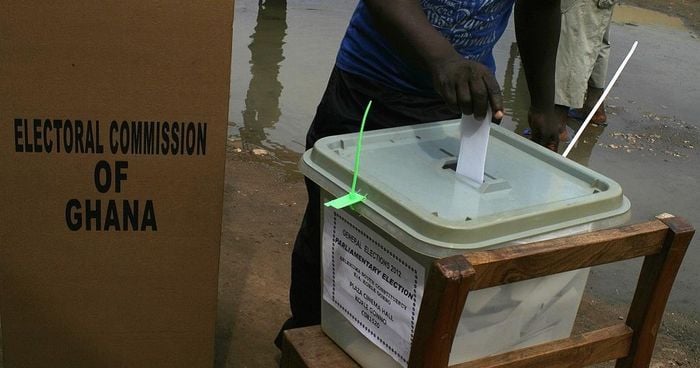
The simmering political tensions in Ghana’s Central Region boiled over on election day in the Twifo-Hemang-Lower-Denkyira Constituency, specifically at the Twifo Frame polling station. The arrival of Electoral Commission officials with voting materials, conspicuously lacking a security escort, ignited a volatile confrontation between supporters of the ruling New Patriotic Party (NPP) and the opposition National Democratic Congress (NDC). The ensuing chaos, erupting around 10:30 am, threatened to derail the electoral process. Order was precariously restored thanks to the swift intervention of the presiding officer, who managed to de-escalate the situation and prevent further violence. District Chief Executive, Mr. Foster Andoh, appealed for calm and unity, urging constituents to prioritize peace over partisan politics, particularly during the critical election period. This incident underscores the fragility of political stability in the region and highlights the importance of adequate security measures to ensure peaceful elections.
The incident at Twifo Frame wasn’t an isolated case of electoral challenges. At the Saboni School Complex polling station in the Gomoa East Constituency, an 80-year-old woman, Madam Hannah Amissah, faced a different, yet equally frustrating, hurdle. Despite confirming her registration during the voter exhibition exercise, her name was inexplicably missing from the voter register on election day. Adding to the confusion, a similar name, “Ama Amissah,” appeared on the register, raising questions about potential clerical errors or more serious issues of voter registration irregularities. Madam Amissah, understandably distressed, recounted confirming her registration alongside her son, Daniel Amissah, and daughter-in-law, Lucy Amissah, both of whose names appeared correctly on the register. This discrepancy fueled her suspicion and dissatisfaction with the process.
The presiding officer at the Saboni School Complex, Mr. Cornelius Gbetie, explained that Madam Amissah’s inability to produce her identification card further complicated the situation. Without the necessary identification to verify her identity and confirm the registration, the presiding officer was unable to allow her to cast her ballot. This incident highlights the critical importance of both accurate voter registration and proper identification procedures on election day. While the presiding officer adhered to protocol, the incident left Madam Amissah disenfranchised, raising concerns about the accessibility and inclusivity of the voting process, particularly for vulnerable populations such as the elderly.
These two incidents, though distinct, expose vulnerabilities within Ghana’s electoral system. The near-violent clash at Twifo Frame demonstrates the potential for political tensions to escalate into physical confrontations, particularly in the absence of adequate security measures. The case of Madam Amissah, on the other hand, showcases the potential for administrative errors and procedural hurdles to disenfranchise eligible voters. Both scenarios underscore the need for robust electoral reforms and meticulous planning to ensure free, fair, and inclusive elections.
Addressing these issues requires a multi-pronged approach. First, reinforcing security protocols at polling stations is crucial to prevent violence and maintain order. This includes deploying sufficient security personnel, especially in areas identified as potential hotspots for political tensions. Second, streamlining the voter registration process and implementing stringent quality control measures can minimize errors and ensure the accuracy of the voter register. This might involve employing technology-based solutions for voter verification and identification. Third, clear and accessible procedures for addressing voter registration discrepancies and challenges on election day are essential. This could include establishing dedicated help desks and providing adequate training to polling station officials on resolving such issues effectively and sensitively.
Furthermore, fostering a culture of peace and tolerance among political parties and their supporters is paramount. Civic education programs and inter-party dialogue can promote understanding and respect for the democratic process, mitigating the potential for violence. Finally, ensuring the accessibility of polling stations for all citizens, including the elderly and persons with disabilities, is crucial for inclusive participation. This may involve providing transportation assistance, accessible voting booths, and other necessary accommodations. By addressing these challenges comprehensively, Ghana can strengthen its electoral system and ensure that the right to vote is protected for all citizens.