





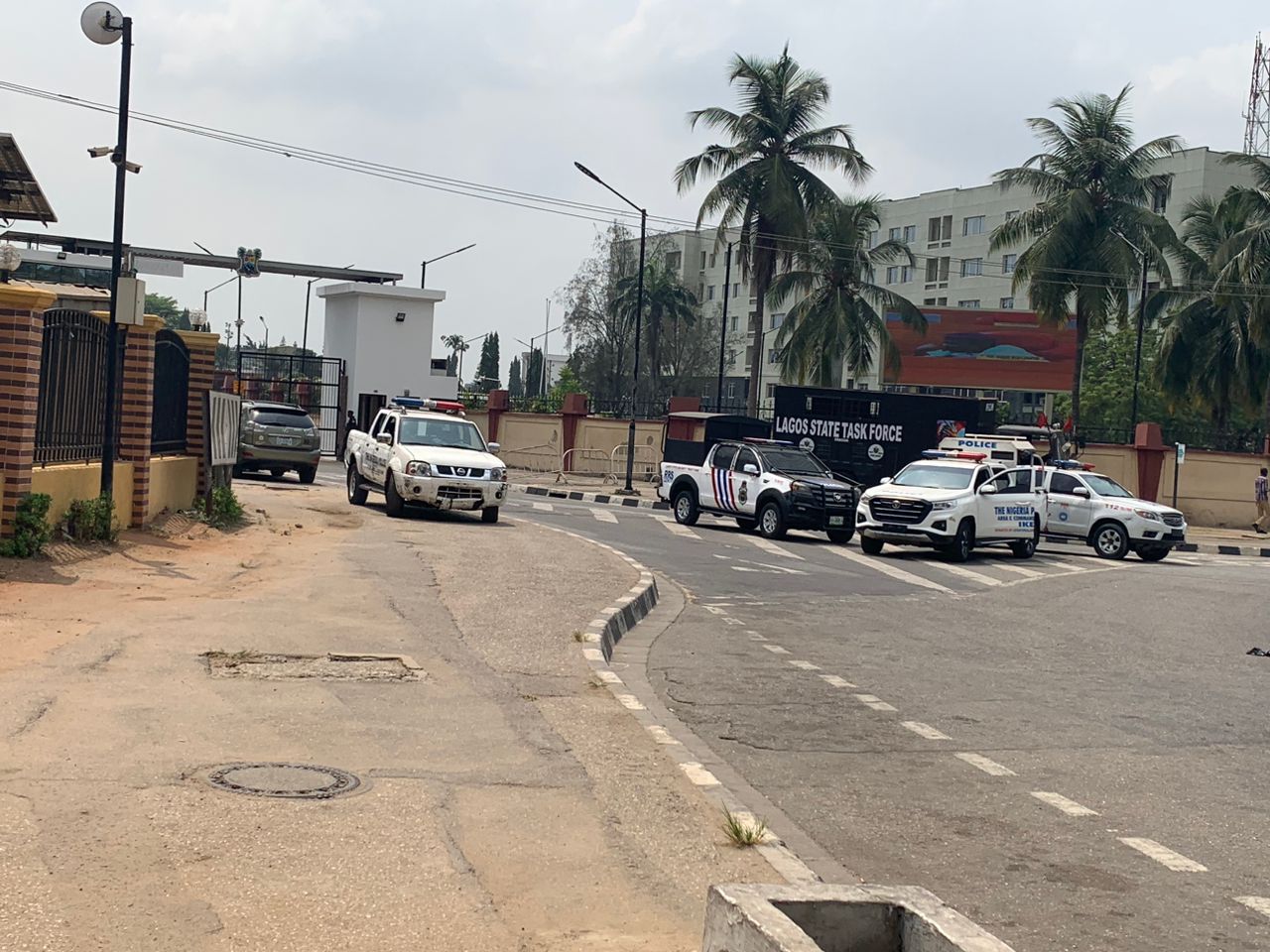
Paragraph 1: Unfolding Drama at the Lagos State House of Assembly
A dramatic scene unfolded at the Lagos State House of Assembly on Monday, February 17, 2025, as the scheduled plenary session was disrupted by a heavy security presence. The assembly complex was effectively under siege, with no fewer than ten police vans stationed at the gate, barring entry to the legislative chambers. Lawmakers were observed congregating outside, unable to commence their legislative duties. This unusual display of security force effectively paralyzed the day’s proceedings, creating an atmosphere of tension and uncertainty within the hallowed halls of the Lagos State legislature. The unfolding events pointed towards a serious internal conflict, the details of which were yet to emerge.
Paragraph 2: The Focus on Speaker Mojisola Meranda
While the precise reasons for the security lockdown remained shrouded in mystery, sources within the assembly complex pointed towards a specific target: Speaker Mojisola Meranda. Reports indicated that officials from the Department of State Services (DSS), Nigeria’s primary intelligence agency, had sealed off Speaker Meranda’s office. This action immediately fueled speculation of a possible investigation or disciplinary action against the Speaker. Adding to the intrigue, security personnel specifically assigned to Speaker Meranda were observed guarding the sealed-off area. This unusual arrangement further intensified speculation regarding the Speaker’s involvement in the unfolding events.
Paragraph 3: A State of Uncertainty and Speculation
The unexpected lockdown of the Lagos State House of Assembly and the targeted action against Speaker Meranda caused a ripple of uncertainty and speculation throughout the political landscape of Lagos State. The lack of official communication from either the assembly leadership or the security agencies further exacerbated the situation. The unusual nature of the security deployment, with a significant presence of both police and DSS personnel, hinted at a serious and potentially high-profile investigation. Observers wondered whether the events were related to internal political wrangling within the assembly, allegations of corruption, or perhaps even a broader security concern.
Paragraph 4: The Implications for Lagos State Politics
The paralysis of the Lagos State House of Assembly had immediate and potentially far-reaching implications for the governance of the state. With the legislature unable to convene, critical legislative functions were effectively suspended. This disruption could impact the passage of laws, the approval of budgets, and the overall functioning of the state government. The events also raised concerns about the stability of the political landscape in Lagos State, a crucial economic and political hub in Nigeria. The apparent conflict within the assembly could lead to political instability and potentially affect the delivery of essential services to the citizens of Lagos.
Paragraph 5: The Need for Transparency and Accountability
The unfolding drama at the Lagos State House of Assembly underscored the critical need for transparency and accountability in government. The lack of official communication from the authorities left the public in the dark, fueling rumors and speculation. A clear and concise statement from the assembly leadership or the relevant security agencies would help to clarify the situation and allay public concerns. Transparency in the investigation and any subsequent actions would be essential to maintain public trust and confidence in the integrity of the legislative process.
Paragraph 6: The Role of the Media and Public Scrutiny
The events at the Lagos State House of Assembly highlighted the crucial role of the media in bringing such incidents to light and holding those in power accountable. Journalists, like Gbenga Oloniniran, who reported on the unfolding situation, played a vital role in informing the public and ensuring that the actions of the authorities were subject to public scrutiny. The continued vigilance of the media and the engagement of civil society organizations would be essential in monitoring the situation and advocating for transparency and accountability in the resolution of the crisis. The events serve as a reminder of the importance of a free press and an active citizenry in safeguarding democratic principles and ensuring good governance.








