









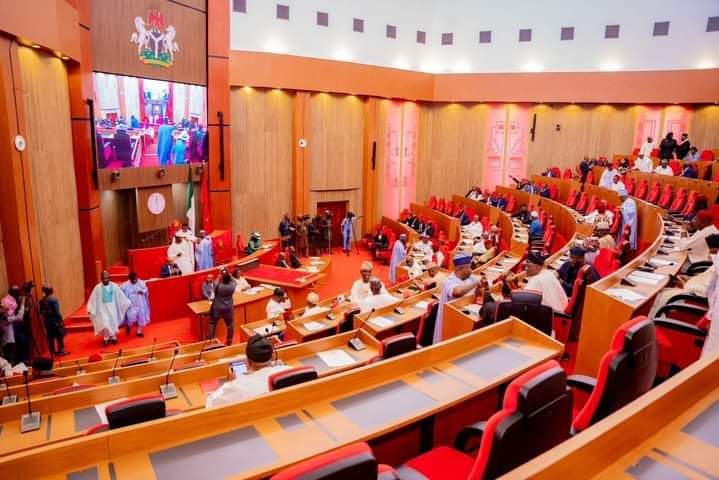
The Senate of Nigeria has successfully passed a significant piece of legislation known as the Nigeria Deposit Insurance Corporation Act No. 33 of 2023 during its third and final reading. Sponsored by Senator Adetokunbo Abiru from Lagos East and backed by members of the Senate Committee on Banking, Insurance, and Other Financial Institutions, this bill aims to bolster the capacity of the Nigeria Deposit Insurance Corporation (NDIC) to safeguard depositors, stabilize financial institutions, and enhance public trust in the banking system. Senator Abiru emphasized that the legislation is intended to enhance the effectiveness, independence, and autonomy of the NDIC while aligning it with current realities and best practices in the financial sector.
One of the key aspects of the new bill is the consolidation of the President’s authority to appoint the Chairman and board members of the NDIC. This amendment marks a shift from the previous system, where the Central Bank of Nigeria was responsible for recommending appointments. Instead, the Central Bank now takes on a supervisory role, allowing the NDIC to concentrate on bank examinations more effectively. Senator Abiru acknowledged that, while the NDIC 2023 Act marked progress compared to the previous 2006 Act, there had been ongoing debates about its implementation, prompting stakeholders to call for clearer amendments to address several issues.
The proposed changes in the 2024 bill are crucial for strengthening Nigeria’s financial system, as articulated by Senator Abiru. He asserted that the amendments would expand the NDIC’s capacity to protect depositors and ensure financial stability while fostering trust in the banking sector. Notably, the bill represents a timely adaptation to the rapidly changing financial environment as it addresses emerging challenges and opportunities, ensuring the NDIC can effectively fulfill its role.
The 2024 bill also clarifies the President’s constitutional authority regarding appointments, specifically restricting the requirements of the NDIC’s leadership to those recommended by the Central Bank Governor. The bill further suggests a review of the provision designating the Permanent Secretary of the Ministry of Finance as the Chairman of the Board due to the demands of that role. In light of this, the bill now mandates the Minister of Finance to establish an Interim Management Committee within 30 days after the end of the Board’s tenure to maintain smooth operations and prevent disruptions.
Senator Abiru underscored the consensus among stakeholders regarding the importance of the NDIC in protecting depositors and ensuring the efficient settlement of insured funds in case a financial institution fails to repay deposits. He indicated that this legislative review is vital to allow the NDIC to function effectively, uphold its independence, and conform to best practices. Given the evolving landscape of both global and domestic banking, these amendments are critical to keeping the NDIC relevant and operationally efficient.
The legislative process for the new bill involved extensive stakeholder engagement, with over 30 written memoranda and numerous oral presentations received in support of the proposed changes. This broad consensus reflects the underlying recognition of the NDIC’s crucial role in safeguarding depositors and maintaining confidence within the financial sector. The advancements represented in this bill are anticipated to address current challenges and enhance the efficacy of the NDIC, thereby contributing to a more stable and reliable banking environment in Nigeria.









