





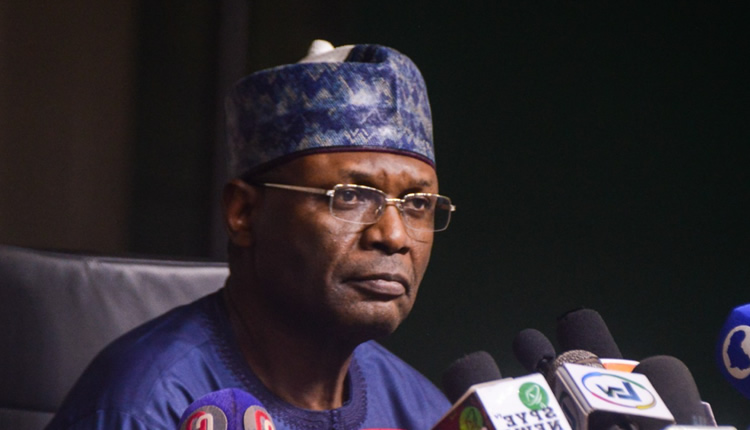
The Socio-Economic Rights and Accountability Project (SERAP) has initiated a contempt lawsuit against Prof. Mahmood Yakubu, the Chairman of the Independent National Electoral Commission (INEC). This legal action comes in light of allegations that INEC has not complied with a court order issued on July 18, 2024, by Justice Obiora Egwuatu of the Federal High Court in Abuja. The court mandated the electoral body to investigate allegations of electoral offences that occurred during the 2023 general elections. Despite SERAP’s appeals and the established court order, INEC appears to have stalled in its obligation to pursue investigations into the indicated electoral malfeasance, raising concerns over accountability and adherence to the rule of law in Nigeria’s electoral processes.
SERAP’s complaint articulates the significance of the court order that compelled INEC to address cases of electoral malfeasance, including bribery and undue influence by state governors and their deputies. The order further urged INEC to appoint independent legal counsel to investigate these allegations. SERAP’s Deputy Director, Kolawole Oluwadare, emphasized the severity of INEC’s disobedience to the court’s ruling, warning that failure to comply could lead to contempt of court charges against Prof. Yakubu. The situation has unfolded amidst ongoing concerns over widespread electoral violence and bribery, with SERAP arguing that allowing such infractions to go unaddressed undermines the integrity of Nigeria’s democratic process and mocks the citizens’ right to a fair electoral system.
The disdain for the judiciary exhibited by INEC, according to SERAP, poses a serious threat to Nigeria’s democratic framework. The organization pointedly criticized INEC’s continued disregard for court orders, contending that this approach erodes public confidence in the electoral governance system. SERAP argued that a functional democracy must rely on the enforcement of court rulings, and that the electoral commission’s failure to uphold judicial decisions throttles participatory democracy and accountability. With recent allegations of electoral misconduct in Edo State, SERAP highlighted that INEC’s inaction indicates a failure to learn from past electoral crises and persistent issues that plague Nigeria’s electoral landscape.
As the country approaches the governorship election in Ondo, SERAP has called for decisive action from INEC to mitigate the ongoing electoral offences. The organization insists that addressing the impunity associated with these violations is essential to safeguarding citizens’ rights to vote and engage in the political arena effectively. Citing the court’s judgment, SERAP reiterated that the pattern of violence related to elections severely obstructs citizens from exercising their voting rights, consequently jeopardizing the establishment of credible governance in the long term. The group’s unyielding commitment demonstrates a serious concern for the democratic process and the rule of law in Nigeria, emphasizing the interconnectedness of electoral integrity and public trust.
Identifying electoral violence and associated crimes as a central obstacle to Nigeria’s democratic progression and economic development, SERAP posits that its appeal to INEC reflects a profound sense of civic responsibility. Citing the Electoral Act of 2022, SERAP noted that specific provisions detail the types of electoral offences that need to be prosecuted, reiterating INEC’s mandated role in enforcing these laws. This aspect of the law highlights the statutory duties of INEC, underscoring the legal expectations placed upon the commission to act diligently and ensure accountability among violators. By neglecting these responsibilities, SERAP argues that INEC not only contravenes the law but also diminishes the essence of democracy within the nation.
In July 2024, the directed accountability for state officials concerning electoral crimes was a significant decision by the Federal High Court. SERAP’s subsequent push in September 2024 called upon INEC to enforce this court judgment decisively, reasserting the necessity for rigorous enforcement to deter electoral crimes. The organization’s efforts showcase a critical battle for adherence to legal protocols and the foundational principles of democracy in Nigeria. With ongoing political activities and upcoming elections, SERAP’s actions emphasize the need for robust mechanisms to curtail electoral malpractice, thereby fostering an environment where fair and credible elections can thrive amid the backdrop of Nigeria’s sociopolitical complexities.
Thus, SERAP’s lawsuit against the INEC Chairman is emblematic of broader frustrations within civil society regarding political accountability and electoral integrity in Nigeria. The organization’s persistent legal battles not only highlight the specific non-compliance of INEC with judicial directives but also symbolize the struggles faced by citizens in demanding their rights in a potentially compromised democratic framework. As Nigeria navigates its electoral realities, the outcomes of such lawsuits may ultimately shape the effectiveness of electoral laws and the trajectory of governance as citizens seek a political landscape that upholds accountability and the rule of law.








