





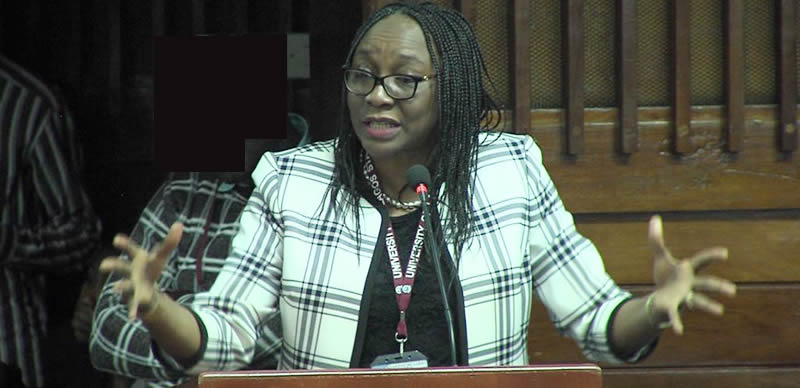
At a recent event organized by the US Consulate-General in collaboration with the University of Lagos (UNILAG), the Vice-Chancellor, Prof. Folashade Ogunshola, emphasized the importance of learning from the United States’ electoral system. Ogunshola highlighted key principles such as transparency, accountability, and inclusivity as valuable lessons Nigeria could adopt to enhance its democratic processes. The event, themed “Democracy in Action: Understanding the U.S. Electoral Process,” comes at a pertinent time as the US prepares for its presidential election on November 5, 2024, where Vice President Kamala Harris will face former President Donald Trump. Ogunshola’s remarks, delivered by Deputy Vice-Chancellor Prof. Bolanle Oboh, underline the potential for these principles to serve as a model for strengthening Nigeria’s democracy and fostering citizen engagement.
Prof. Ogunshola articulated that understanding the intricacies of the American electoral process is crucial for fostering democratic engagement in Nigeria. She pointed out that embracing principles such as freedom of speech, the rule of law, and the protection of individual rights could significantly contribute to improving Nigeria’s electoral practices. By looking at how these values are upheld in the US, Nigeria can work towards a more robust democratic framework and a culture of active citizenship. She called upon both students and faculty to engage in democracy-building activities on campus, such as participating in student government, debating civic responsibilities, and promoting discussions on democratic processes.
Complementing Ogunshola’s insights, Prof. Gabriel Babawale, who specializes in Political Economy and International Relations, remarked on Nigeria’s political system, which is modeled after American presidential democracy. He highlighted the similarities between the two nations as multi-ethnic societies, noting that America’s commitment to checks and balances serves as a crucial governance principle that Nigeria should strive to emulate. Babawale emphasized the necessity of implementing practices like early voting and extending voting rights to Nigerians living in the diaspora, which he believes would bolster democratic participation and representation.
The issue of voting rights for Nigerians in the diaspora was further supported by an editorial from PUNCH, which asserted that diaspora Nigerians should have an equal right to vote. With significant economic contributions amounting to around $20 billion through remittances in the previous year, the editorial underscored the importance of diaspora voices in shaping the country’s leadership. Ignoring this demographic’s input would not only be unjust but also imprudent, as they hold positions integral to the nation’s economy. The editorial highlighted that the diaspora community’s participation in elections is fundamental to cultivating a democracy where every citizen’s voice matters.
During the event, Mr. Michael Ervin, a Political and Economic Chief at the US Consulate, spoke on the nature of elections as mechanisms for accountable governance. He explained the concept of the electoral college, a significant aspect of the American voting system that complicates the relationship between popular votes and final election outcomes. Ervin noted that it is possible for a candidate to win the popular vote yet lose the presidency, as evidenced in the elections of 2000 and 2016. He reinforced the idea that while democracy is the best form of governance, it is inherently challenging and imperfect, requiring ongoing efforts to improve and adapt.
In conclusion, the discussions at the University of Lagos event reflect a growing awareness of the need for electoral reforms in Nigeria, drawing viable lessons from the United States’ democratic practices. Prof. Ogunshola and other speakers articulated a vision for a more transparent, accountable, and inclusive electoral process in Nigeria, advocating for increased citizen participation and engagement in democratic activities. The recognition of diaspora voting rights underscores the importance of ensuring that all Nigerians, regardless of their location, have a stake in the nation’s future. As Nigeria continues to grapple with its democratic processes, adopting best practices from the US electoral system could serve as a critical pathway towards fostering a more robust democracy that actively involves all citizens.








