









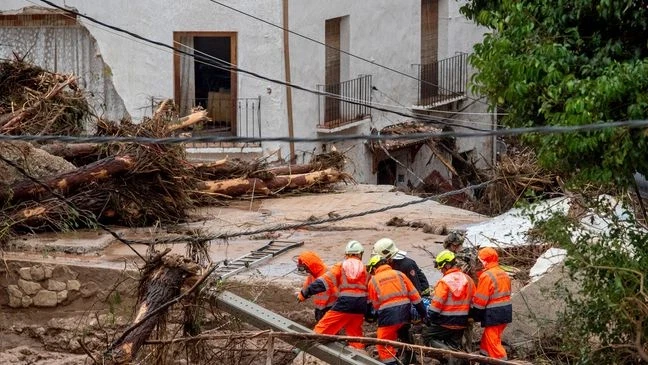
The recent catastrophic floods in Spain have resulted in a substantial death toll, currently standing at 158, as rescue operations are ongoing. The tragedy stems from an exceptionally powerful Mediterranean storm that struck on Tuesday, bringing with it heavy rainfall and torrents of mud, devastating numerous communities, especially in the eastern Valencia region. Emergency services have confirmed that they have recovered 155 bodies from this area alone, with additional fatalities reported in Castilla-La Mancha and Andalusia. With many individuals still unaccounted for and certain regions inaccessible, national officials have expressed concern that the death toll may continue to rise. Prime Minister Pedro Sanchez urged the public to stay indoors and heed emergency services, stressing that the immediate priority is to save lives amidst the chaos.
As the calamity unfolded, King Felipe VI warned the nation that the emergency response was ongoing, with the national weather service placing parts of eastern and southern Spain on high alert for further rain. In honor of the victims, flags were flown at half-mast across government buildings, and citizens observed moments of silence as the country entered three days of national mourning for its deadliest floods in decades. Eyewitness accounts from residents in the Valencia suburbs paint a harrowing picture of the floods’ severity. One resident recounted how raging waters swept away an individual seeking refuge in a vehicle, and many struggled to cling to trees as they were carried away by the relentless current.
The rescue efforts are being bolstered by drones and over 1,200 troops working tirelessly amidst the debris of mud-covered towns and villages. The destruction is evident with abandoned vehicles strewn across areas, resembling a collapsed house of cards. Reports confirm that entire neighborhoods have been devastated, leaving businesses in ruins, as described by locals like musician David Romero, who lamented the widespread destruction in his community. Temporary accommodations have been established for hundreds displaced by the floods. Meanwhile, Transport Minister Oscar Puente indicated that restoring high-speed train services between Madrid and Valencia could take up to three weeks due to extensive damage.
Scientists and experts have pointed to human-induced climate change as a contributing factor to the increasing frequency and intensity of such extreme weather phenomena. As the nation grapples with the aftermath of the floods, questions about the effectiveness of warning systems have emerged. Many residents in the most affected areas claimed they did not receive adequate notifications regarding the impending disaster, leaving them unprepared and vulnerable. Officials and community members alike expressed frustration over the timing and accuracy of the alerts, with some asserting that warnings arrived only after the local river had already overflowed.
The political ramifications of the disaster are beginning to surface, with tensions mounting regarding responsibilities for managing emergency protocols. The conservative president of the Valencia region appeared to deflect blame towards the central government, while the interior ministry countered by asserting that the regions hold substantial responsibilities in civil protection during crises. This has sparked political discourse surrounding the efficacy of emergency management in a decentralized system like Spain’s, where cities and regions possess significant autonomous power.
The tragic consequences of the floods have ignited a broader discussion within Spain about disaster preparedness and mitigation strategies. As communities begin the long process of recovery, the need for resilience against future extreme weather events becomes paramount. Various stakeholders, including government officials, scientists, and local leaders, must work collaboratively to enhance early-warning systems and implement more robust infrastructure to safeguard lives and property in the face of an uncertain climate future. The events in Spain may serve as a critical reminder of the need for proactive measures to adapt to the changing environmental landscape, as the country navigates through this grave chapter filled with grief and recovery.









