





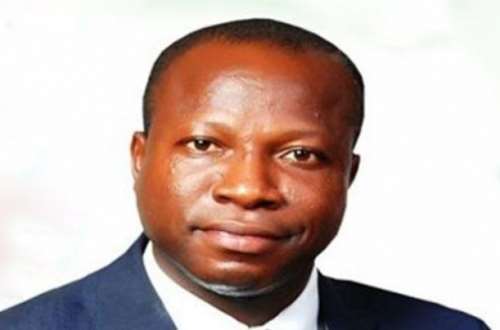
Social commentator and activist James Kwabena Bomfeh, widely known as Kabila, has voiced serious concerns about the conduct of Ghana’s Speaker of Parliament, Alban Bagbin, claiming that his actions pose a significant threat to the nation’s democracy. During an appearance on Peace FM, Kabila specifically criticized the Speaker’s approach to handling a contentious parliamentary dispute concerning the status of four Members of Parliament (MPs) who had their seats declared vacant. The tension surrounding this issue arose after the National Democratic Congress (NDC), under the leadership of Dr. Cassiel Ato Forson, invoked Article 97(1)(g) of the 1992 Constitution, setting the stage for escalating conflicts within the legislature.
The backdrop of this controversy includes a recent Supreme Court stay of execution concerning Bagbin’s actions; however, the NDC caucus has decidedly chosen to adhere exclusively to the Speaker’s directives. This decision further exacerbates already heightened tensions within Parliament, with potential implications for its overall functionality and the legislative process. Kabila pointed out that the failure to adhere to the established rule of law in this situation risks eroding the foundations of democracy in Ghana.
Kabila’s critique extends to Speaker Bagbin’s decision to indefinitely adjourn Parliament on October 22, an action he believes undermines the stability and continuity required for effective governance. He articulated his concerns about how such a move could destabilize the democratic institutions that are critical to Ghana’s political landscape. Kabila emphasized the importance of maintaining parliamentary decorum and operational integrity, suggesting that the Speaker’s unilateral decisions could lead to a diminished trust in the institution and a weakening of democratic principles.
In reinforcing his argument, Kabila cited constitutional provisions, declaring that the number of parliamentary seats is sacrosanct under the law and asserting that the Speaker cannot unilaterally decide to reduce this number, even with support from the Supreme Court. This claim reflects a fundamental tenet of democratic governance: that institutions must operate within the constraints of the law, ensuring that all parliamentary procedures are respected and observed. This belief serves as a cornerstone for Kabila’s assertion that Bagbin’s actions are not merely procedural missteps but rather a potential danger to Ghana’s democratic fabric.
The implications of these developments transcend mere parliamentary politics; they speak to broader issues surrounding governance, accountability, and the rule of law in Ghana. Kabila’s remarks resonate with those who are concerned about the integrity of democratic processes, particularly in a time when political tensions are high. His appeals to uphold democratic institutions and operate within the scope of the law are meant to galvanize public awareness and provoke discussions among citizens regarding the state of their democracy.
In conclusion, James Kwabena Bomfeh, or Kabila, is shining a spotlight on alarming developments in Ghana’s parliamentary proceedings, particularly the controversial actions of Speaker Alban Bagbin. His criticisms act as a clarion call for adherence to democratic norms and the rule of law, underlining that the actions of individuals in positions of power significantly impact the health of democratic institutions. As tensions persist within Parliament, the discourse surrounding these events highlights the vital necessity for transparency, stability, and respect for constitutional frameworks in order to safeguard Ghana’s democracy.








