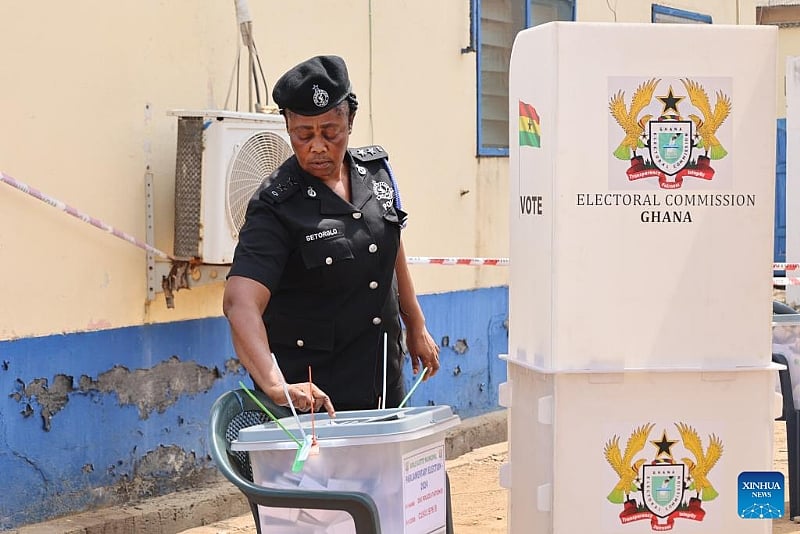
The Coalition of Domestic Election Observers (CODEO) has raised alarms regarding significant irregularities during the special voting exercise held on December 2. In their statement on December 3, CODEO acknowledged that, for the most part, the voting process proceeded smoothly across various polling stations. However, they emphasized that certain infractions had occurred, threatening the overall integrity of the electoral procedure. The organization pointed to instances where the secrecy of the vote was compromised, specifically highlighting reports of voters taking photographs of their ballots after they had marked them. Such actions pose a serious risk to electoral confidentiality, a cornerstone of democratic voting practices.
One of the troubling incidents noted by CODEO took place in the Cape Coast North constituency, where security personnel intervened to stop a voter from photographing their completed ballot. This kind of behavior was not isolated; similar actions were reported in Walewale, where a voter allegedly took a photograph of their ballot as a means to prove their vote in order to receive financial compensation. Additionally, in the Navrongo Central constituency, both a police officer and an official from the Electoral Commission (EC) found themselves detained for taking pictures of their ballots, thus further eroding trust in the electoral process.
In tandem with concerns surrounding ballot photography, CODEO also documented instances of vote-buying during the special voting. In Keta, located within the Volta Region, reports emerged of party representatives distributing cash to voters in exchange for their votes. Such actions not only undermine the principle of free and fair elections but also raise questions about the influence of financial incentives in shaping electoral outcomes. In Weija-Gbawe, partisans linked to the New Patriotic Party (NPP) were observed distributing sums ranging from GHS 100 to GHS 500 to voters, which CODEO condemned as an outright violation of electoral integrity.
Both vote-buying and the act of photographing ballots highlight the vulnerabilities present within the electoral system. CODEO has called upon the Ghana Police Service to take immediate and decisive action against these violations to restore public confidence in the electoral proceedings. The coalition has urged the leadership of the Electoral Commission, as well as the National Election Security Task Force, to implement stringent directives for presiding officers and security personnel at polling stations to ensure such malpractices do not recur in the upcoming December 7 elections.
The credibility of an electoral process is pivotal to a functioning democracy, and CODEO’s observations shed light on the various ways in which this credibility can be undermined. By calling attention to both the challenges posed by vote-buying and the breaches of voting secrecy, CODEO aims to raise awareness of these issues and mobilize necessary actions from relevant authorities. A fair and transparent electoral process not only fosters democratic values but also influences the overall political landscape of the nation.
Ultimately, the disturbing reports from the special voting exercise cast a shadow over the integrity of the electoral process in Ghana. It is essential that all stakeholders, including voters, political parties, and election officials, commit to upholding democratic principles and ensuring a level playing field. Without concerted efforts to address these vulnerabilities, the trust of the electorate in the electoral system may wane, threatening the very foundations of democratic governance in the country. As the nation approaches the critical moments of the upcoming elections, maintaining transparency and reinforcing the integrity of the electoral process should remain paramount.