





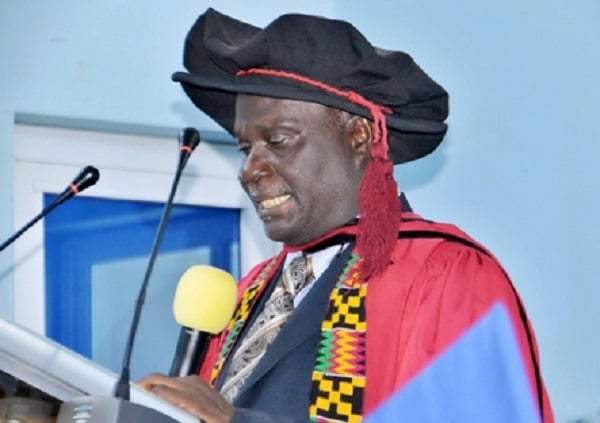
Professor Kofi Agyekum, a noted academic and former Head of Linguistics at the University of Ghana, has expressed his concerns regarding the recent behavior exhibited by Members of Parliament (MPs) in Ghana. This criticism comes in light of a tumultuous event that erupted over issues surrounding the majority status in Parliament. The situation intensified when Speaker Alban Bagbin declared four parliamentary seats vacant, which led to a temporary reconfiguration of power dynamics. Both the New Patriotic Party (NPP) and the National Democratic Congress (NDC) have engaged in a fierce showdown over who rightfully holds the majority, reflecting the deep-seated political tensions in the country.
In a candid interview on Peace FM’s popular Kokrokoo morning show, Professor Agyekum did not mince words as he described the chaotic scenes unfolding in the Parliament as “disgraceful.” His remarks highlight his disappointment with the conduct of some MPs, emphasizing that such behavior tarnishes the reputation of the Ghanaian Parliament. The tumultuous nature of the parliamentary proceedings has drawn significant public attention, and the professor’s critical analysis raises questions about the integrity and professionalism of contemporary lawmakers compared to their predecessors. His commentary indicates a growing concern that the division and factionalism in Ghana’s political arena undermine the democratic processes that are foundational to the country’s governance.
At the heart of his critique is the perception that certain MPs appear “aimless,” suggesting a lack of direction and purpose in their legislative roles. This characterization points to a deeper issue regarding the commitment and effectiveness of current legislators in addressing pressing national concerns. Professor Agyekum’s comparison between the current and past members of Parliament implies that there was once a greater caliber of leadership that prioritized the interests of the constituency over political posturing. His suggestion that the behavior observed is more focused on theatrics rather than substantial governance speaks to a disheartening trend in political accountability.
Moreover, Prof. Agyekum’s observations about the “constant jokes and confrontations” emblematic of the current Parliament imply a blurring of the lines between serious legislative work and entertainment. Such a culture, he argues, not only diminishes the credibility of the Parliament but also impacts public perception and trust in elected officials. The spectacle of MPs engaging in confrontational displays instead of productive debate is viewed as a significant regression from the dignity that should accompany such a revered institution. His remarks serve as a call for reflection among lawmakers, urging them to prioritize the principles of democratic governance and civil discourse.
In the broader context of governance and political stability in Ghana, the challenges faced by Parliament are symptomatic of deeper societal issues. As the NPP and NDC grapple over their claims to majority representation, it is clear that political rivalry is overshadowing the need for collaborative governance aimed at societal improvement. Prof. Agyekum’s critique can be seen as part of a larger discourse about the role of political leaders as stewards of democracy, positing that their actions have far-reaching consequences for the socio-political landscape in Ghana. It emphasizes the importance of integrity, accountability, and a renewed commitment to serving the public interest, rather than perpetuating factional disputes.
The implications of this situation are profound. If lawmakers continue to engage in behavior that is perceived as unbecoming, it risks alienating constituents and eroding the democratic foundations upon which the nation stands. The public’s faith in their leaders is crucial for the country’s overall unity and progress. Professor Agyekum’s insights encourage a critical examination of not only the actions of MPs but also the systemic influences that foster such behaviors. In advocating for a more effective legislative body, his comments highlight the need for political maturity and a collective focus on governance that prioritizes national interests over party rivalries.
In summary, the commentary by Professor Agyekum serves as a noteworthy reflection on the current state of Ghana’s Parliament, spotlighting the detrimental effects of confrontational politics on democratic institutions. His perspective raises essential questions about the responsibilities of MPs as representatives of the people and the standards of conduct expected from them. By urging a departure from theatrical confrontations and a return to serious parliamentary discourse, the professor calls for a reevaluation of priorities among lawmakers. Such reflections could pave the way for restoring confidence in Ghana’s political processes and encourage a shift towards more collaborative governance that prioritizes national development over partisan disputes.








