









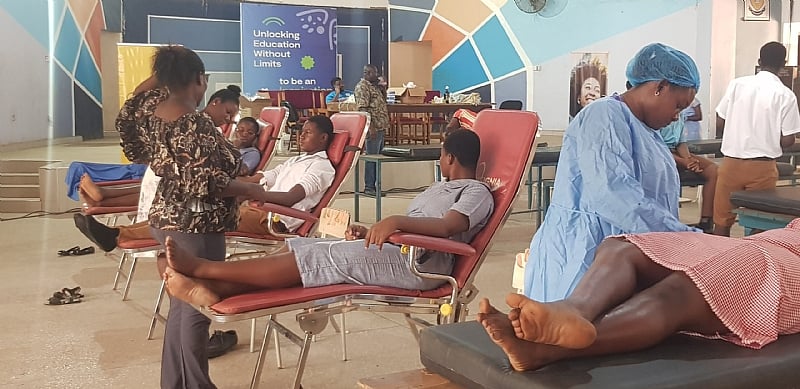
The Sunyani Teaching Hospital is grappling with a severe blood shortage, a situation primarily attributed to its recent upgrade and subsequent influx of patients referred from other healthcare facilities, particularly those in rural areas. Enoch Gyau, a biomedical scientist and head of the hospital’s blood bank, voiced this concern during blood donation drives held at Sunyani Senior High and Twene Amanfo Technical and Senior High Schools, organized in partnership with the MTN Ghana Foundation. He underscored the urgency of voluntary blood donations to replenish the dwindling supply and meet the escalating demand. The hospital, he warned is teetering on a crisis and unless people come forth to help with donations, the hospital could turn away any patient requiring blood transfusion. Mr. Gyau also said that the hospital’s blood bank is currently operating below its optimal capacity, jeopardizing the timely provision of blood transfusions for critical patients. He therefore stressed that without adequate blood reserves, the hospital’s ability to effectively address emergencies and complex medical cases would be severely compromised
The blood donation exercises, conducted in conjunction with MTN Ghana Foundation’s annual “Save a Life” campaign, aim to address the chronic blood shortage plaguing the hospital and the wider region. This initiative, which takes place every year on February 14th, supports the National Blood Service in restocking regional blood banks while providing students with an opportunity to contribute to a life-saving cause. Mr. Gyau emphasized the critical role of blood donation in saving lives, urging public participation to ensure a consistent supply. He highlighted the limited shelf life of collected blood – a mere 35 days – further emphasizing the need for regular donations to maintain sufficient reserves.
The shortage at the Sunyani Teaching Hospital reflects a broader national challenge. Kofi Owusu, the Bono Regional Manager for MTN Ghana, cited World Health Organization (WHO) statistics, highlighting the life-saving impact of blood transfusions globally. However, he expressed concern that many Ghanaian hospitals and blood banks continue to struggle with inadequate blood supplies, falling short of the WHO’s recommended minimum of 10 units per 1,000 population. This shortfall poses a significant threat to healthcare provision, potentially leading to adverse outcomes for patients requiring transfusions.
The “Save a Life” project, established by MTN Ghana Foundation in 2011, was specifically designed to address this critical issue. The project, inspired by a national call from Blood Service Ghana, aims to boost blood bank stocks and encourage voluntary blood donation across the country. Since its inception, the project has collected over 29,000 units of blood demonstrating its significant contribution to national blood reserves. This proactive approach underscores the importance of public-private partnerships in strengthening healthcare systems and ensuring access to essential resources like blood.
The blood shortage at the Sunyani Teaching Hospital, while immediately pressing, is symptomatic of a systemic challenge within Ghana’s healthcare landscape. The hospital’s upgrade, while improving its service capacity, has inadvertently exacerbated the demand for blood, exposing the underlying scarcity. This situation highlights the need for sustained efforts to promote voluntary blood donation and enhance the nation’s blood collection and distribution infrastructure.
Addressing this challenge requires a multi-pronged approach. Public awareness campaigns are crucial to dispel misconceptions about blood donation and encourage greater participation. Furthermore, strengthening collaboration between healthcare institutions, government agencies, and organizations like MTN Ghana Foundation can facilitate more effective blood drives and improve the overall management of national blood reserves. Ultimately, ensuring a reliable and adequate blood supply is essential for safeguarding public health and providing timely and effective medical care to all those who need it.









