









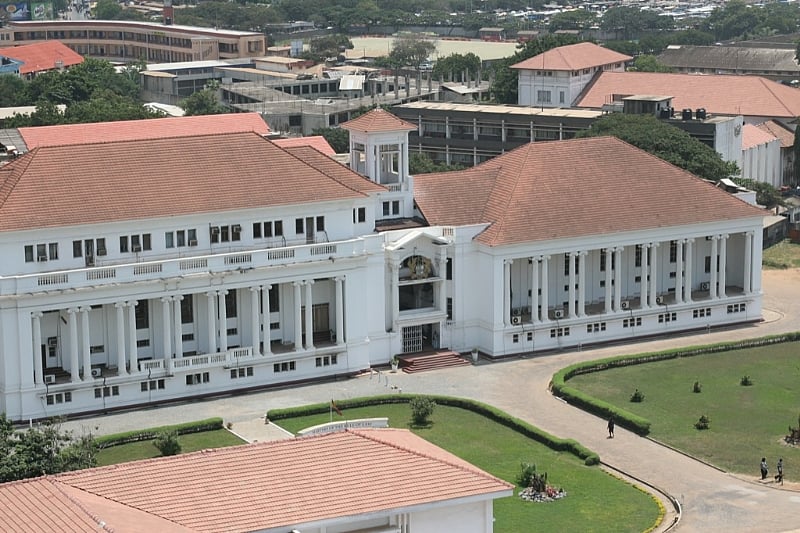
The Supreme Court recently addressed a significant challenge brought forth by the Speaker of Parliament regarding a court injunction concerning four vacant parliamentary seats. A five-member panel convened to hear the case, during which an objection was raised concerning the recusal of one of the panel members, Justice Ernest Yao Gaewu. The objection was rooted in the claim that Justice Gaewu’s prior affiliation as a parliamentary candidate for the New Patriotic Party (NPP) created a conflict of interest, raising questions about his impartiality in the proceedings. However, the Supreme Court ruled unanimously that the case at hand was fundamentally a constitutional issue, rather than one that was intrinsically tied to the interests of any particular political party.
Mr. Thaddeus Sory, representing the Speaker of Parliament, argued for the need to recuse Justice Gaewu from the panel based on his former political alignment. The Supreme Court, however, countered this argument by highlighting that several members of the panel had past affiliations with other political entities, namely the National Democratic Congress (NDC) and the Peoples National Convention (PNC). This response underscored the Court’s emphasis on the constitutional nature of the issues being deliberated upon, suggesting that the political affiliations of judges, while relevant in some contexts, did not disqualify them from serving impartially in this matter.
The ruling on the Speaker’s application is anticipated to play an important role in determining the status of the vacant parliamentary seats, which have implications for the legislative process and political balance within the Parliament. The injunction in question has created a cloud of uncertainty regarding representation in these seats, and the Supreme Court’s forthcoming decision aims to resolve these legal ambiguities. The speaker’s challenge stems from a larger concern about the impact of unresolved vacancies in Parliament and the need for a timely legislative response.
As the Supreme Court prepares to issue its ruling, the importance of this case extends beyond the immediate political ramifications. It raises broader questions about the intersection of the judiciary and political party affiliations, particularly in contexts where judicial impartiality is paramount. Observers are paying close attention to how the Court’s decision might reflect on its stance regarding political neutrality and the integrity of its judicial processes.
The implications of the case could affect not merely the parliamentary representation of the constituencies involved but also set a precedent for how similar challenges might be handled in the future. Legislative bodies often face complex legal and political challenges, and a definitive ruling from the Supreme Court could provide a framework for resolving disputes tied to legislative vacancies. Furthermore, this situation is indicative of the delicate balance that must be maintained between judiciary independence and the political landscape within which it operates.
In conclusion, the Supreme Court’s proceedings regarding the Speaker of Parliament’s challenge to the injunction on the four vacant seats bring to light vital constitutional issues that resonate beyond the sphere of party politics. The decision is poised to clarify the relationship between judiciary members’ political backgrounds and their ability to impartially adjudicate cases, potentially influencing future legal interpretations and the functioning of parliamentary governance. As the Court gets ready to deliver its ruling, stakeholders from various sectors remain vigilant, recognizing the profound implications this case may hold for parliamentary operations and broader legal principles in the nation.









