





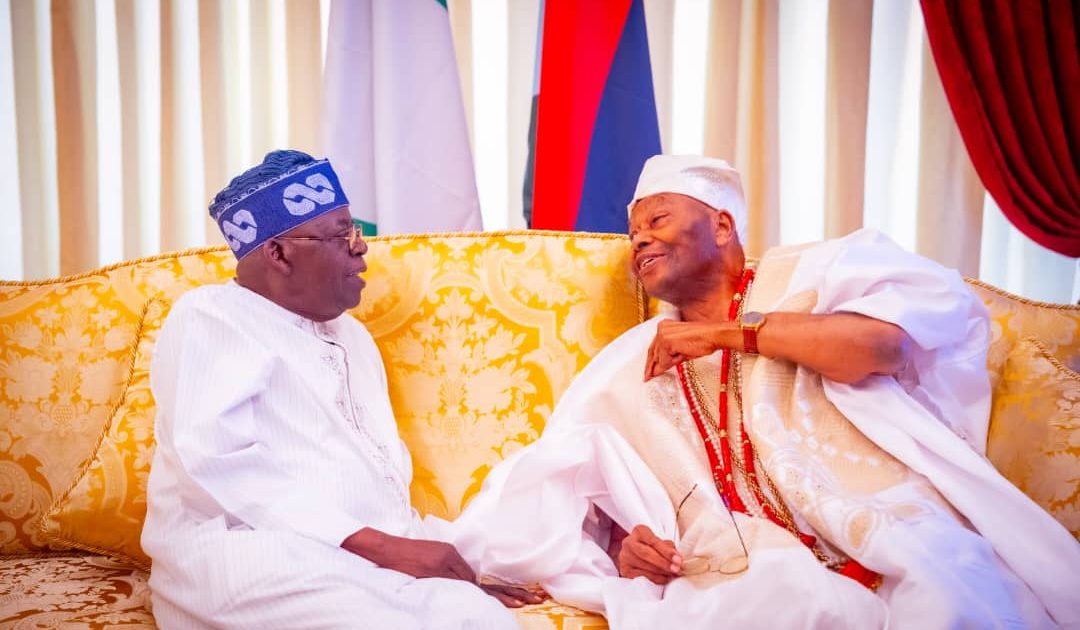
President Bola Tinubu’s recent meeting with the Awujale of Ijebuland, Oba Sikiru Adetona, at his Lagos residence underscores the growing recognition of traditional rulers’ crucial role in shaping Nigeria’s future. The meeting, characterized by a shared commitment to national unity and progress, serves as a powerful symbol of collaboration between the government and traditional institutions. The closed-door discussions focused on addressing Nigeria’s complex challenges and exploring strategies for strengthening national cohesion, good governance, and economic development. The President’s emphasis on building partnerships and cultivating a strong national identity underscores his belief in the power of collective action and shared values to propel the nation forward.
The visit, initiated by the Awujale, was also an opportunity for the revered monarch to express his gratitude for the recent conferment of the Grand Commander of the Order of the Niger (GCON), the second highest national honour, by President Tinubu. This prestigious award, bestowed upon the Awujale during his 90th birthday and 64th coronation anniversary celebrations, recognizes his immense contributions to national development over his remarkable six-decade reign. The Awujale, being the longest-reigning first-class monarch in Nigeria, embodies the enduring strength and influence of traditional institutions in the country’s socio-political landscape. The conferment of the GCON not only acknowledges the Awujale’s individual achievements but also symbolizes the respect and value the government places on the wisdom and guidance of traditional leaders.
The President’s emphasis on the vital role of traditional institutions reflects a broader understanding of their deep-rooted influence within Nigerian society. These institutions, often predating the modern Nigerian state, command significant respect and authority within their communities. Their intimate knowledge of local customs, traditions, and power dynamics makes them indispensable partners in navigating complex social issues and promoting peace and stability. Traditional rulers, like the Awujale, act as bridges between the government and the people, facilitating dialogue, resolving disputes, and fostering a sense of shared identity and purpose. Their involvement in governance and development initiatives can significantly enhance the effectiveness and legitimacy of government policies and programs.
The Awujale’s long and distinguished reign provides a compelling example of the positive impact traditional rulers can have on national development. His commitment to his people, his wisdom in navigating challenging times, and his advocacy for education, healthcare, and economic empowerment have significantly improved the lives of countless citizens in Ijebuland and beyond. His influence extends beyond his immediate community, serving as a role model for other traditional leaders and inspiring a new generation of leaders committed to serving their people. The Awujale’s legacy of service and commitment to national progress underscores the invaluable contributions of traditional institutions to Nigeria’s development.
The meeting between President Tinubu and the Awujale signifies a renewed focus on collaborative governance, recognizing the unique strengths and perspectives of both the government and traditional institutions. By working together, they can leverage their combined resources and influence to address pressing national challenges and build a more prosperous and united Nigeria. This partnership holds immense potential for fostering inclusive governance, promoting sustainable development, and strengthening the fabric of Nigerian society. The shared commitment to national unity and progress demonstrated by both leaders sets a positive precedent for future collaborations and reinforces the importance of working together to achieve common goals.
The discussions held during the meeting, focused on constructive solutions to Nigeria’s challenges, highlight the shared responsibility for addressing the complex issues facing the nation. The emphasis on building partnerships and cultivating a strong national identity underscores the importance of collective action and shared values in driving progress and prosperity for all citizens. The positive engagement between President Tinubu and the Awujale serves as a beacon of hope, demonstrating the transformative potential of collaboration and shared vision in building a stronger, more united, and prosperous Nigeria. This meeting marks a significant step towards harnessing the collective wisdom and resources of both the government and traditional institutions for the betterment of the nation.








