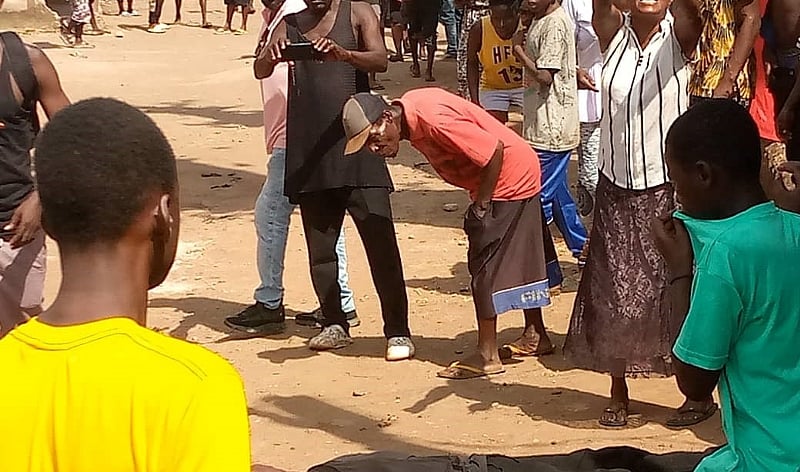
On a significant Friday afternoon, the Odambea Festival in Mankessim, celebrated by the Nkusukum Traditional Area, was marred by tragedy when a young man, presumed to be in his early 30s, was fatally shot. This cultural festival, which spans across approximately 20 communities including Biriwa, Anomabo, Kromantsir, and Saltpond, was intended to mark the commencement of festivities rooted in the community’s rich traditions. However, the backdrop of ongoing chieftaincy disputes has overshadowed the festival, hindering its full commemoration for several years. In a bid to revitalize this cultural heritage, the Chiefs and People of Yamoransa, under the leadership of Okogyeman Okese Essandoh IX, recently re-launched the festival, aimed at celebrating its 50th edition next year.
The re-launch included the establishment of a five-member planning committee tasked with organizing the upcoming anniversary celebrations, signifying a concerted effort to unify the community and honor their heritage. A new logo featuring a prominent Eagle, symbolic of the Nkusukum people’s journey from Tekyiman to their current location, was unveiled. This deep-rooted symbolism exemplifies the community’s resilience and connection to its history. Yet, the recurring conflicts surrounding chieftaincy issues represent a significant challenge to these efforts, as they have historically disrupted communal events and celebrations.
Eyewitnesses to the tragic incident on Friday reported that tensions escalated during a ritual procession involving a bull that was meant to initiate the festival’s activities. A faction involved in ongoing chieftaincy litigation obstructed portions of the road, leading to a verbal dispute that rapidly turned violent. The victim, identified as Ato Kyinam, was caught in the altercation, which culminated in his untimely death. The juxtaposition of a cultural celebration against the backdrop of violence underscores the fragility of social cohesion within the community, heavily influenced by historical grievances and disputes over leadership.
The police were present at the scene of the violence, yet their response has been questionable, as they remained tight-lipped when approached by the Ghana News Agency (GNA) for details regarding the incident. This silence has raised concerns regarding the effectiveness of law enforcement in ensuring the safety of citizens during public gatherings, particularly in areas fraught with tension. The lack of clarity around the events further perpetuates the cycle of fear and uncertainty within the community, prompting calls for greater accountability and intervention from authorities.
The Odambea Festival holds significant cultural importance, representing more than just a celebration; it embodies the spirit and identity of the Nkusukum people. However, the ongoing disputes and violent incidents threaten to diminish its significance. Resolving these disputes is crucial to restoring peace and enabling the community to celebrate its heritage fully. As the festival approaches its 50th anniversary, stakeholders must prioritize dialogue and conflict resolution to pave the way for a more harmonious celebration that honors both tradition and the memories of those impacted by the violence.
In conclusion, the tragic shooting of Ato Kyinam during the Odambea Festival’s commencement rituals highlights the urgent need for peace-building efforts within the Nkusukum Traditional Area. As the community gears up for their milestone celebration, it is imperative to address the underlying issues that have plagued the region for years. By fostering unity and promoting reconciliation among the factions involved in the chieftaincy disputes, the region can work toward reclaiming the joyful essence of the festival, allowing it to serve as a platform for healing and cultural expression rather than a reminder of violence and division.