









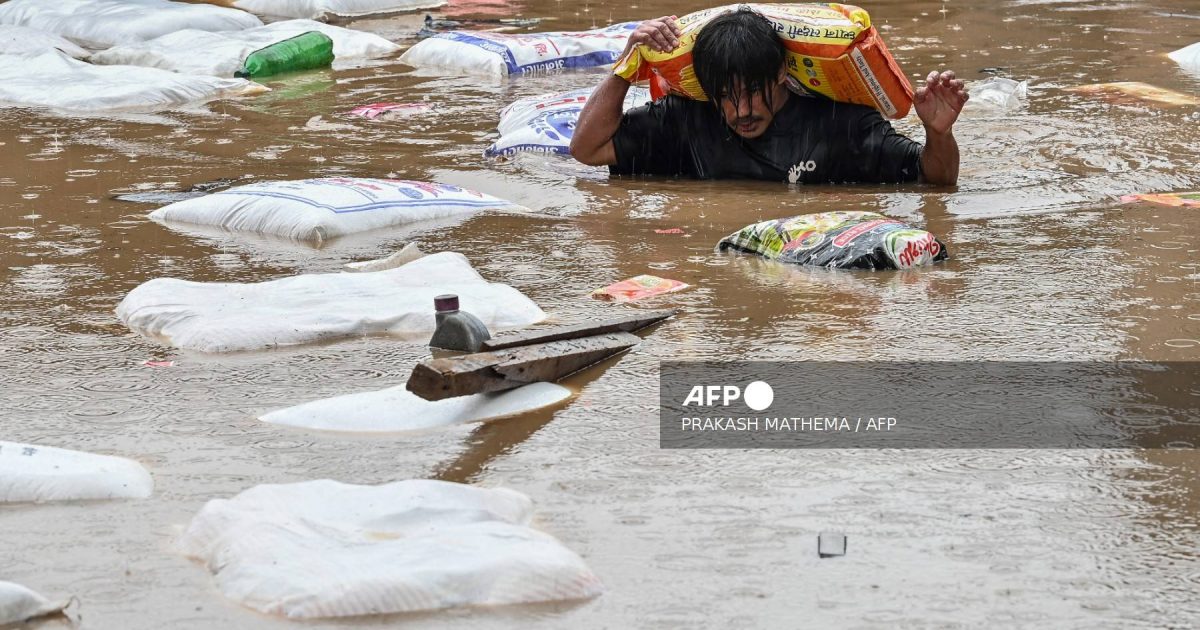
On Friday, Philippine rescue workers faced significant challenges as they battled floodwaters to reach residents trapped on rooftops following the devastating impact of Tropical Storm Trami. The storm has claimed at least 40 lives and left tens of thousands of people displaced. Torrential downpours inundated many areas, delivering rainfall equivalent to two months’ worth in just two days. Andre Dizon, police director for the severely affected Bicol region, highlighted the dire situation, reporting ongoing entrapments and calls for help from those stranded. The situation has remained critical, with hopes pinned on the flooding subsiding as rain has ceased.
President Ferdinand Marcos addressed the accessibility hurdles that rescuers encountered while attempting to reach affected areas, particularly in Bicol. He pointed out that unprecedented landslides had occurred in regions not previously prone to such events, indicating the saturation of soil and lack of drainage for excessive rainfall. Reports from cities like Naga and Legazpi confirmed a high number of casualties that rescue teams had not yet been able to access. As Tropical Storm Trami moved away from the Philippines and continued over the South China Sea, newer reports contributed to the rising death toll.
The aftermath of the storm revealed specific tragedies, including the discovery of unidentified bodies in Sampaloc village in Batangas province and additional fatalities in the coastal village of Subic Ilaya. These incidents underscored the emphasis on rescue operations that still needed to confirm the number of affected individuals. Meanwhile, despite Manila’s relative safety from severe flooding reminiscent of earlier storms, various neighborhoods experienced significant water accumulation, with government offices and schools on the main island of Luzon closed as a precaution.
In light of the hazardous conditions, storm surge warnings remained active along the west coast, and significant rainfall data was reported by the state weather agency. The figures indicated that Batangas province had recorded about 391.3 millimeters of rain, pulverizing towns with sludge-like volcanic sediment. Late Thursday, an official report indicated that 193,000 people had been evacuated due to urban flooding that turned streets into rivers, particularly impacting the Bicol region, where substantial evacuations had already occurred.
Rescue efforts in the Bicol region’s Naga City and nearby Nabua municipality were particularly notable as volunteers utilized boats to reach stranded residents, often responding to calls for help disseminated on social media platforms like Facebook. Meanwhile, a hospital in Lemery town faced hampered operations as floodwaters overwhelmed its facilities, forcing it to turn away patients in need of emergency medical care. The local disaster office also suspended the search for a missing fisherman due to dangerous currents in the Bulacan province.
While the Philippines is accustomed to encountering around 20 typhoons annually, recent studies reveal an alarming trend that storms are forming closer to coastlines and intensifying more rapidly due to climate change. This growing concern indicates that communities need to enhance their preparedness and responses to increasingly severe and prolonged weather events. The events of Tropical Storm Trami serve as a reminder of the vulnerabilities in disaster management and the urgent need for ongoing support and intervention in affected regions.









