





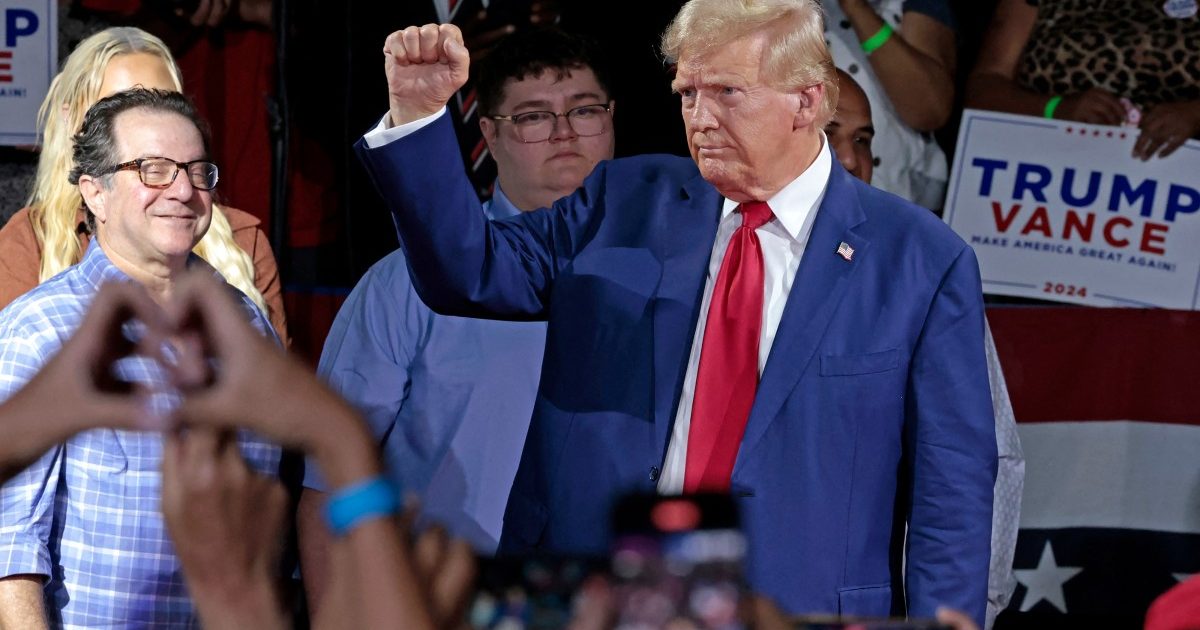
In the final week of an intensely fought presidential campaign, former President Donald Trump held a rally where he adamantly refuted allegations of authoritarianism and fascism leveled against him by opponents, including Vice President Kamala Harris. Trump criticized Harris’s narrative that anyone voting against her is akin to a Nazi, asserting, “I’m not a Nazi. I’m the opposite of a Nazi.” His remarks came against the backdrop of increasingly heated political discourse, as both candidates sought to rally their bases for a significant election, described as one of the closest in modern American history. The atmosphere was further charged by a controversial rally Trump held in New York, which included pronounced racist remarks from some attendees, provoking a wave of backlash.
Tension in the race, which was capturing the nation’s attention, was compounded by concerns about potential voter intimidation and disruption to the electoral process. Incidents such as an arson that destroyed hundreds of ballots in Washington state and vandalism to a ballot box in Portland, Oregon, highlighted the volatile environment surrounding the election. The fear that Trump might again resist acknowledging defeat, reminiscent of the 2020 election aftermath, lingered over the campaign, intensifying each candidate’s rhetoric as they geared up for what could be a contentious conclusion to their contest.
Amid the controversy, Harris, aspiring to be the first female president, took aim at Trump’s comments about Puerto Rico made during his New York rally. She labeled his remarks as “nonsense” and accused him of being self-absorbed and divisive, lacking a substantive approach to unify the nation. In her campaigning across Michigan, she emphasized the stakes involved and characterized Trump as becoming increasingly unpredictable and seeking unchecked power, underscoring her commitment to a more inclusive and collaborative governance model.
In a show of support, former President Barack Obama galvanized Harris’s base in Philadelphia, particularly addressing Puerto Rican voters. He criticized Trump’s allies for promoting racist and derogatory stereotypes, urging voters to reject anyone who does not recognize the equal rights and dignity of all citizens. His sentiments aimed to reinforce the urgency and importance of the election for communities of color and those seeking equity in opportunity. Obama highlighted that Puerto Ricans, while unable to vote for president, hold significant sway in battleground states like Pennsylvania.
During rallies in Atlanta, Trump sought to rally his supporters by attacking Harris and former First Lady Michelle Obama, with whom he has had previous conflicts. He reiterated his hardline positions on immigrants and perceived internal political enemies, framing himself as a bulwark against the chaos he associates with Harris’s campaign. With early voting in full swing, the race’s dynamics shifted as both candidates needed to mobilize their core constituents while also appealing to the small pool of undecided voters in crucial swing states. With over 47 million Americans already casting their votes, engagement and turnout were crucial in these final days leading up to the November 5 election.
As the campaigns approached their climax, Harris prepared to make a definitive statement near the White House, signaling a clear contrast to Trump’s inflammatory rhetoric and actions during his presidency. The gravity of the moment was heightened, as this location served as a stage where Trump incited his supporters on January 6, 2021, culminating in a violent attack on the Capitol. Harris’s upcoming speech represented an opportunity to directly address the nation regarding her vision for the future and to connect the dots between past grievances and a hopeful, unified America. The stakes were high, with both candidates recognizing that the outcome would significantly shape the political landscape for years to come.








