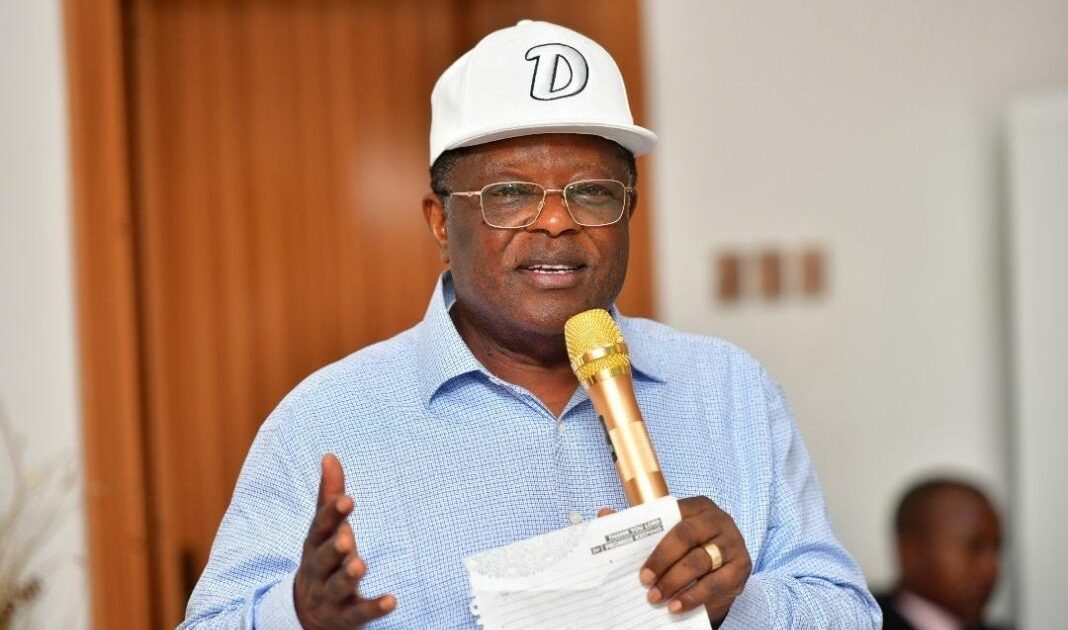
The ongoing challenges of infrastructure development in Nigeria were underscored by Minister of Works, David Umahi, who recently announced that the financial requirements for completing the nation’s 2,604 inherited road projects have surged to N19 trillion. This figure represents a notable increase from the previously estimated N13 trillion, primarily driven by fluctuations in the foreign exchange rate and rising prices of essential materials like bitumen. During a press briefing held in Abuja, Umahi updated the public on the state of road infrastructure and emphasized the need for additional funding to tackle these urgent projects. The increase in estimated costs highlights the complexities involved in managing public infrastructure and the overarching need for strategic financial planning.
Umahi’s statements also addressed criticism from Remi Oseni, the Chairman of the House of Representatives Committee on the Federal Roads Maintenance Agency, who had implied the Minister was misallocating priorities with regard to Nigeria’s road conditions. The Minister defended his position by detailing the detrimental impacts of price variations and foreign exchange differentials that had plagued existing projects. He clarified that, under the current administration, problematic pricing variations had been curtailed to better allocate the limited resources available. Umahi reiterated that the projects inherited by President Bola Tinubu were initially estimated at N13 trillion, with an existing contractor debt of N1.6 trillion, thereby painting a picture of substantial financial challenges that the administration faces in delivering on infrastructure promises.
In discussing the impact of economic changes on project costs, Umahi provided a stark illustration of current economic realities. He noted that when the projects were initially conceptualized, the exchange rate stood at N500 per dollar, whereas today the figure has skyrocketed to N1,700. Furthermore, the price of bitumen, an essential construction material, has increased from N600,000 per ton to N1.2 million, which has significantly affected the total project costs. Umahi indicated that due to such economic transitions, a realistic assessment of project budgets now suggests a staggering requirement of over N20 trillion to conclude the ongoing projects effectively.
Despite these financial hurdles, Umahi announced that the government is making admirable progress, with the completion rate of emergency projects awarded in July 2024 standing at 85%. He also elaborated on the N300 billion supplementary budget approved by President Tinubu to facilitate various infrastructure palliatives and initiatives. This financial provision allowed for the procurement and execution of over 330 vital road repairs and bridge projects. Umahi expressed confidence in the Ministry’s successes, promising a forthcoming publication detailing achievements under the supplementary budget which he claimed would counter any negative public sentiment incited by Oseni.
Challenges persist beyond budgetary issues, as Umahi acknowledged that some projects—many of which had been neglected for over a decade—have already been terminated under the current administration’s oversight. He defended the government’s focus on prioritizing major infrastructure projects, asserting that the diligent management of funds is reaping rewards, and underscored the government’s commitment to transparency, stressing that the Federal Emergency Road Maintenance Agency operates without any hidden agenda. However, Umahi did note that some contractors were unhappy with the ministry’s actions, implying a resistance to the transformative measures being undertaken.
In addition to funds and project execution, Umahi highlighted external challenges such as insecurity in the North-West region, which has further complicated construction efforts. The Minister cited incidents of worker kidnappings as a significant barrier to timely project completion, recognizing the interplay between security issues and infrastructure development. As the government navigates these complexities, Umahi remains optimistic about the ability to manage the broad array of difficulties and expressed a commitment to revoking contracts for projects that cannot meet established deadlines, emphasizing accountability in the execution of Nigeria’s critical infrastructure projects moving forward.