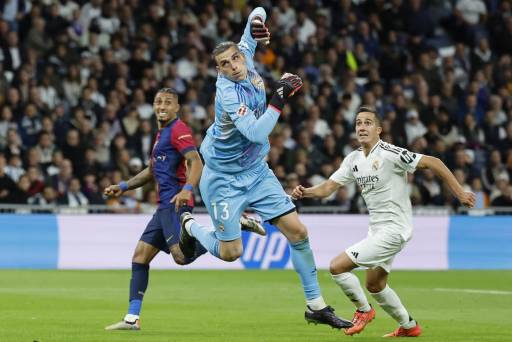
On a memorable Saturday, Robert Lewandowski showcased his striking prowess with two quick goals, leading Barcelona to a stunning 4-0 victory over their fierce rivals, Real Madrid. This win marked a significant moment in La Liga, as it was the first defeat for Madrid in over 12 months. Joining Lewandowski on the scoresheet were teenage sensation Lamine Yamal and Raphinha, both contributing to a decisive second-half surge. Despite high expectations for Madrid’s Kylian Mbappe, who was making his Clasico debut, frustration ensued as two of his goals were disallowed for offside. The defeat left Madrid trailing Barcelona by six points at the top of the league, underscoring the Catalans’ dominance.
This victory was particularly symbolic for Barcelona, snapping Madrid’s impressive 42-match unbeaten streak in the league, just short of equaling Barcelona’s own historical record. Under the tactical leadership of Hansi Flick, this revitalized Barcelona side has quickly forged an identity and resilience that has been lacking in recent seasons. Their triumph not only ended a sequence of four consecutive defeats in the prestigious Clasico but also served as a statement of their capabilities and ambition, highlighting their potential to challenge the very best in football.
Barcelona’s goalkeeper, Inaki Pena, echoed the sentiments of growth and transformation, emphasizing the team’s strategic shift and mental fortitude. He remarked on the demanding high defensive line initiated by Flick, which posed risks but ultimately supported the team’s successful offside traps against Madrid’s more potent players. Pena noted that all the offsides drawn reflected the hard work put in by the entire squad—a testament to effective collaborative defense. This pedagogical approach has created a new Barcelona standard, contrasting with the unpredictability that often plagued them last season.
Real Madrid, managed by Carlo Ancelotti, aimed for a more physical midfield presence with Eduardo Camavinga starting over the veteran Luka Modric. This strategic choice led to a game plan focused on defense and utilizing long balls to exploit spaces behind Barcelona’s high line. However, this plan yielded few results, as Madrid struggled to produce tangible threats offensively. Despite creating a few chances, including an effort from Jude Bellingham that was ultimately ruled offside, the first half concluded with Madrid failing to register a legal shot on goal, illustrating the effectiveness of Barcelona’s defensive organization.
At halftime, Flick’s tactical adjustments saw Frenkie de Jong introduced to regain control in the midfield, and Barcelona’s performance quickly improved. The breakthrough came when Lewandowski converted a well-timed through ball, sending a low shot past Madrid’s goalkeeper, Andriy Lunin. With momentum on their side, Lewandowski found the net again just minutes later, heading in Alejandro Balde’s cross, thus further silencing a beleaguered Santiago Bernabeu.
Madrid’s frustrations mounted as they saw another goal from Mbappe disallowed, while Lewandowski missed out on completing his hat-trick with some uncharacteristic misfires. However, Barcelona was not done; Yamal scored the third goal after a well-executed play involving Raphinha, and the latter capped off the rout with a sublime lob over Lunin. As the final whistle blew, Barcelona emerged not only with a dominant victory but also with newfound confidence and momentum as they solidified their position at the top of La Liga. This Clasico showcased not just a shift in the balance of power but the dawn of a potential new era for Barcelona under Hansi Flick.