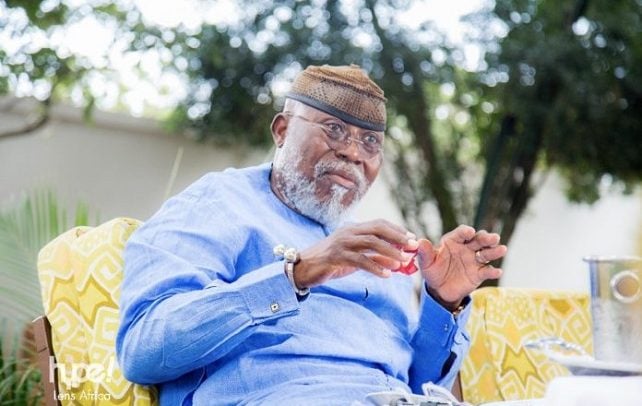
The New Patriotic Party (NPP), a center-right political entity founded on the principles of freedom, justice, human rights, and property-owning democracy, finds itself at a critical juncture, according to founding member Dr. Nyaho-Nyaho Tamakloe. His assessment paints a stark picture of a party adrift from its core values, plagued by an insatiable pursuit of personal wealth among its leaders, and disconnected from the very citizens it was established to serve. This departure from the party’s foundational tenets, Dr. Tamakloe argues, has resulted in a significant erosion of its traditional identity, leaving behind a hollow shell driven by individual greed rather than the collective good. This internal decay, he warns, poses an existential threat to the NPP’s future if left unaddressed.
Dr. Tamakloe’s critique centers on the pervasive self-serving behavior within the party’s ranks, where the accumulation of wealth has supplanted the pursuit of the common good. He laments the transformation of the NPP from a party dedicated to uplifting the citizenry to one where individual enrichment reigns supreme. This shift in values, he contends, has created a chasm between the party and the populace, leading to a profound disconnect that has severely undermined the NPP’s ability to connect with and represent the interests of ordinary Ghanaians. The consequence, he argues, is a party increasingly isolated from its base, jeopardizing its long-term viability.
The recent electoral defeat, a heavy blow to the NPP’s ambition of breaking the eight-year governance cycle, serves as a stark illustration of this disconnect, according to Dr. Tamakloe. He attributes the party’s significant loss, a margin of approximately 1.7 million votes to the incumbent National Democratic Congress (NDC), directly to the internal rot within the NPP. The staggering defeat, he asserts, is a clear indication of the party’s failure to resonate with the electorate, a direct result of its inward focus on personal gain at the expense of public service. The loss, in his view, is not a mere setback but a symptom of a deeper malaise that requires immediate and decisive action.
Dr. Tamakloe’s call for introspection emphasizes the urgent need for the NPP to reclaim its founding principles and reestablish its connection with the masses. He advocates for a return to the party’s core values of selflessness and service, urging a fundamental shift in leadership to steer the NPP back on course. He believes that the current trajectory, if unchecked, will lead to the party’s ultimate demise. The only path to redemption, he insists, lies in a return to the foundational principles that once defined the NPP and a renewed commitment to serving the people. This requires, in his view, a leadership committed to the ideals of the party and not personal enrichment.
Ironically, even as Dr. Tamakloe voices his concerns, the NPP, under the leadership of its national executives and the 2024 flagbearer, Dr. Mahamudu Bawumia, is embarked on a post-election thank-you tour across the country. This tour, ostensibly aimed at expressing gratitude to party supporters, takes place against the backdrop of Dr. Tamakloe’s scathing assessment of the party’s internal state. The contrast between the public display of gratitude and the internal turmoil highlighted by Dr. Tamakloe underscores the complexity of the challenges facing the NPP. The party, while attempting to project an image of unity and appreciation, must also grapple with the fundamental internal issues that threaten its very existence.
The NPP’s future hinges on its ability to confront and address the fundamental issues raised by Dr. Tamakloe. The challenge lies not only in acknowledging the internal decay but also in taking concrete steps towards reform. The question remains whether the party will heed these warnings and embark on a genuine path of renewal, or whether it will continue down a path of self-destruction, further alienating itself from the very people it purports to represent. The party’s response to this internal crisis will determine its future relevance in the Ghanaian political landscape. The post-election thank-you tour, while a customary practice, may be viewed as a missed opportunity to address the concerns of its founding members and begin the hard work of introspection and reform.