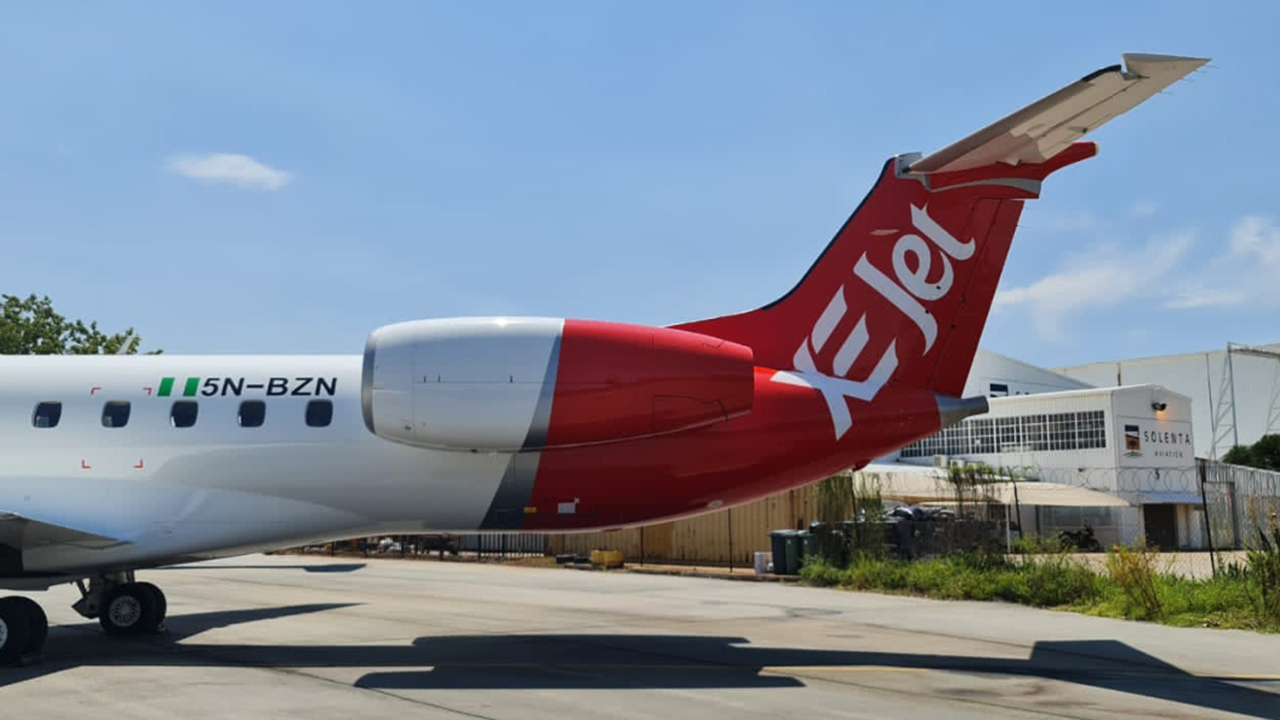
Charter airline XEJet has announced an ambitious plan to construct a Fixed Base Operation (FBO) and maintenance facility in Abuja, Nigeria. This initiative will involve the development of a 40,000 square-meter land space that is integral to the maintenance operations of the airline. XEJet’s Chief Executive Officer, Emmanuel Iza, revealed these plans during a recent event in Lagos. The establishment of an FBO is crucial in the aviation industry as it provides essential services for private and general aviation operations including fuelling, hangar services for aircraft storage, and maintenance tasks to ensure aircraft are maintained in optimal condition. This initiative comes at a critical time when operators in Nigeria have struggled with high maintenance costs which have significantly contributed to rising airfares due to limited access to maintenance facilities.
In a notable development for the airline itself, XEJet received approval for commercial flight operations and is set to launch its inaugural flight on November 2. Iza expressed XEJet’s readiness to undertake full-scale commercial operations, emphasizing the importance of laying a solid groundwork to ensure long-term success amidst the struggles faced by many Nigerian airlines, which have historically had high mortality rates. The Minister of Aviation and Aerospace Development, Festus Keyamo, highlighted that over 100 airlines have folded in the last 40 years due to various challenges, underscoring the importance of XEJet’s efforts in navigating these turbulent waters.
Iza elaborated further on the nature of the maintenance operations, confirming that XEJet Engineering is one of the airline’s operational arms that has received approvals for aircraft maintenance. Currently, the airline holds line maintenance approvals and is set to service its own fleet as its first customer. As the airline begins to clear the land in Abuja designated for the construction of the largest FBO, Iza reiterated that the groundwork is essential for the airline’s anticipated growth. They plan to commence construction at the start of the following year, indicating a promising future for both XEJet and the local aviation ecosystem.
Despite the current limitations on maintenance approvals, which restrict XEJet to basic line maintenance, Iza assured stakeholders that significant efforts are being made to expand further into maintenance, repair, and operations (MRO). He explained that the increasing fleet size, which currently includes around 11 aircraft, presents an opportunity for XEJet to enhance its capabilities to sustain MRO services effectively. There is a clear vision for XEJet to pivot from merely servicing its fleet to offering maintenance services to other operators in the region, fostering growth in local aviation maintenance.
Government support for local airlines has been another focal point of Iza’s announcement. Festus Keyamo has expressed confidence that the Nigerian government’s policy to nurture and bolster domestic airlines will yield dividends in the form of increased competition in domestic routes, which will ultimately lead to reduced airfares for consumers. This sentiment indicates a proactive approach by the government to influence the aviation market and ensure that local airlines like XEJet can thrive in a challenging environment.
XEJet’s plan reflects a significant step not just for the airline but for the Nigerian aviation industry as a whole, offering a potential alleviation of maintenance and operational challenges that have long plagued local operators. With the construction of the FBO facility, XEJet aims to provide vital infrastructure to support the maintenance needs of the industry, thereby positioning itself to play a crucial role in revitalizing and sustaining aviation operations in Nigeria. Overall, this development underscores a renewed commitment to strengthening local capacity in aircraft maintenance and a forward-looking strategy for expanding operations in the Nigerian aviation sector.